Put the stages of a listening lesson plan in order by numbering them 1 - 8. Then, choose the alternative that presents the correct order.
( ) The teacher tells students the title of the story ‗A long journey.
( ) Students listen for gist to see if their predictions were right, and the class discuss their answers with the teacher.
( ) The teacher gives students comprehension questions to read.
( ) Students brainstorm words connected with journeys.
( ) Students listen for specific information.
( ) In pairs, students check their answers.
( ) Students use their answers to re-tell the story in pairs.
( ) The teacher gives students a list of words from a story about a journey. Students check which of their words are i...
The following plan describes a lesson which integrates skills and language work. Number the stages in the correct order and then choose the alternative that presents the correct order.
( ) Students read a text about a Chinese couple who lives in London.
( ) Students look for any language in the text that describes physical appearance.
( ) Students listen to a dialogue about a police line-up before role playing police officers questioning witnesses.
( ) Students answer comprehension questions about the text.
( ) Students write physical descriptions of classmates. Class has to guess who they are writing about.
( ) Students rewrite the text as if the character approved of his wifes appearance.
( ) Students complete a questionna...
Using audio material in class has a number of advantages and disadvantages. Write "for advantage and " for disadvantage. Then choose the alternative that displays the correct sequence.
( ) Audio material is portable.
( ) Everyone has to listen at the same speed.
( ) Learners are prevented from interacting with the speakers.
( ) Audio material provides a variety of different voices and situations.
( ) Listening to a CD player is not a natural occupation.
Which intelligences will be tackled in the activity described below?
"Teacher tells students a riddle and asks them to solve it in pairs".
The statements below describe different issues in second language acquisition. Write " if the statement is TRUE and ¨"if the statement is FALSE. Then choose the alternative that displays the correct sequence.
( ) It is as difficult to ¨Dget at¡¬ linguistic competence in a second language as it is in a first.
( ) The inability to produce an item also means an inability to comprehend the item.
( ) Adults and children alike appear to have the capacity to acquire a second language at any age. ( ) The variability of second language acquisition is affected by the same variables that are applicable to first language acquisition.
( ) Input is more important to second language learners than it is to first language learners.

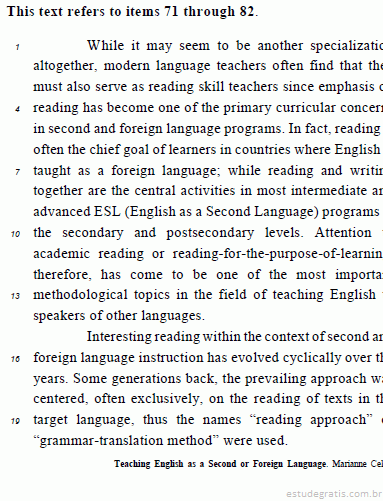
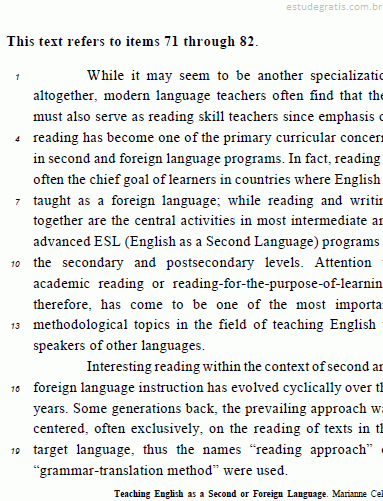
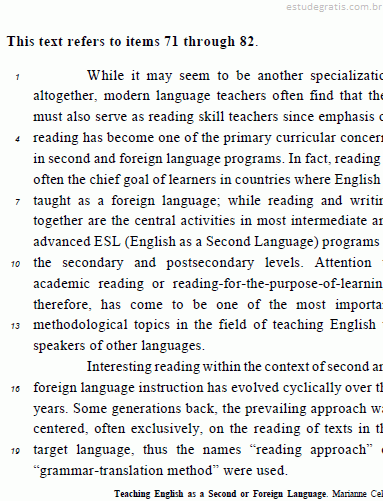
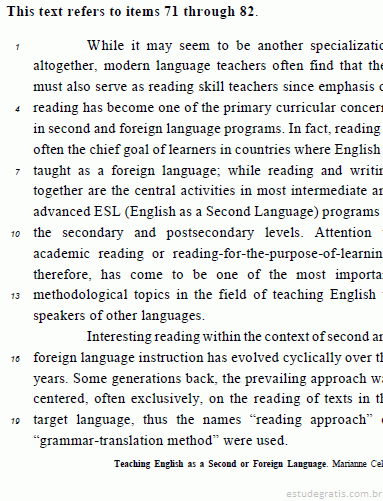
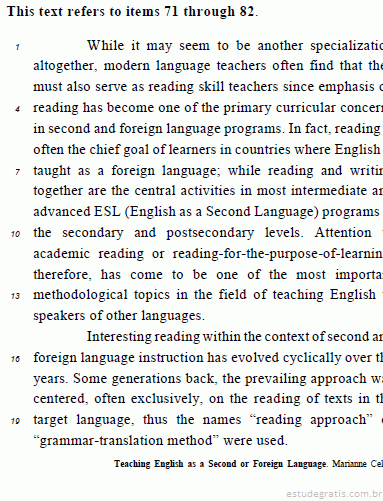
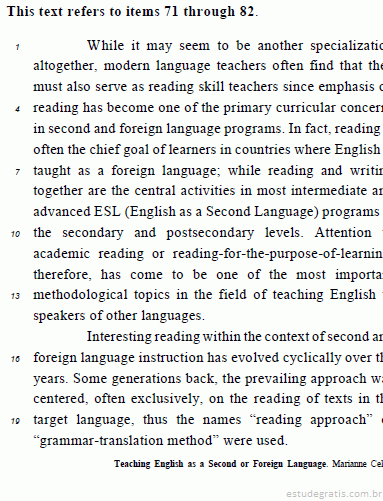
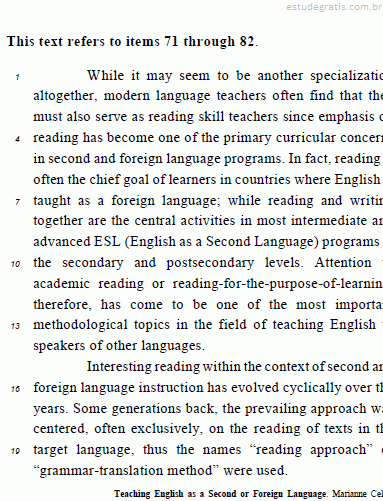
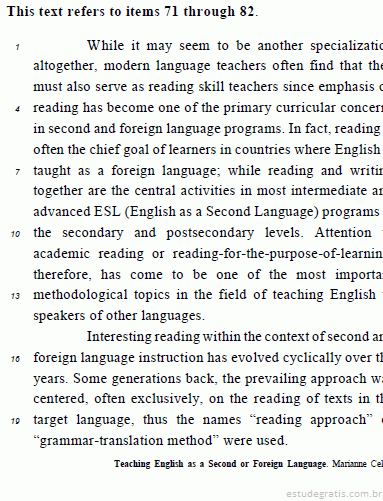
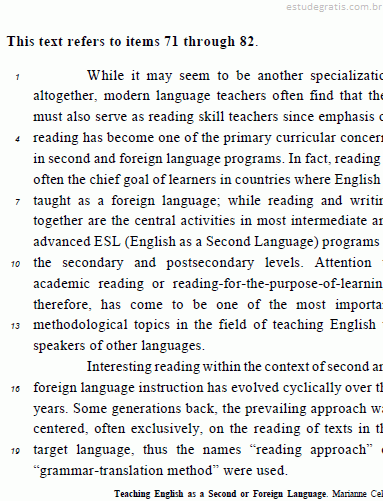
According to the text, judge the following items.
Reading is another specialization language teachers find together.

According to the text, judge the following items.
Modern language teachers hardly ever have to serve as reading skill teachers.

According to the text, judge the following items.
Reading has been considered an important subject.

According to the text, judge the following items.
Reading has become an important concern in second language programs, but not in foreign language programs.

According to the text, judge the following items.
Reading is the main objective in countries where English is taught as a second language.

According to the text, judge the following items.
Reading and writing skills are relevant to be taught at the secondary and postsecondary levels.

According to the text, judge the following items.
In Brazil, the main goal of students who take ESL classes is to speak English fluently, without any foreign accent.

According to the text, judge the following items.
Teaching English for reading in its own right has remained unchangeable all along the years.

According to the text, judge the following items.
Some time ago, reading was learned based only on texts written in foreign language.

In the text,
“altogether” (l.2) is the same as all together.

In the text,
“reading” (l.4) is a noun.

In the text,
“In fact” (l.5) is synonymous with as a matter of fact.

Based on the text, it can be deduced that
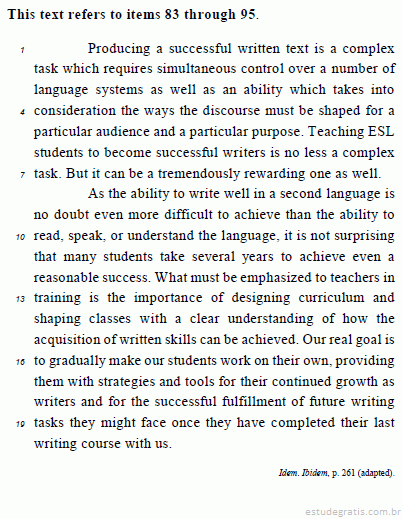
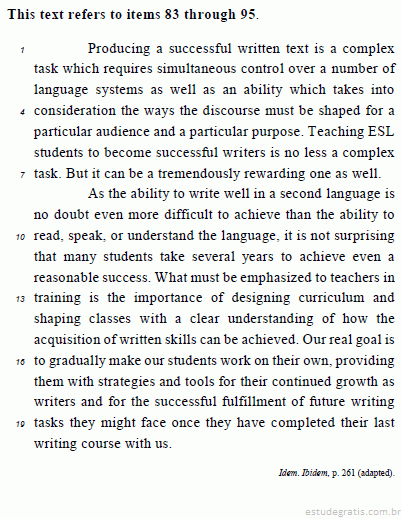
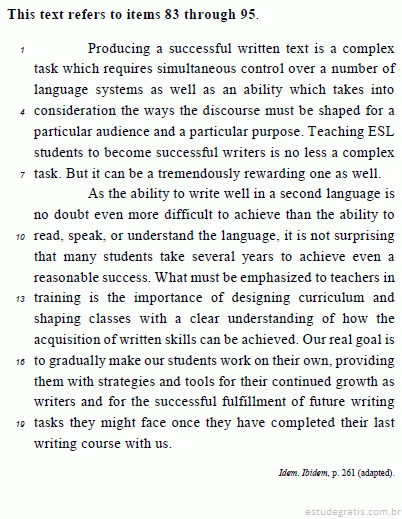
to produce a well-written text is not an easy task.

Based on the text, it can be deduced that
a good writer has to master more than one language system.

Based on the text, it can be deduced that
written discourses ought to keep the same features regardless of those who are going to read it.

Based on the text, it can be deduced that
To write well in a second language requires a lot of training.

Based on the text, it can be deduced that
to write well can be said to be the most complex of the four abilities involved in learning a foreign language.

Based on the text, it can be deduced that
for the typical student, acquiring reading skills is more difficult than learning how to write well.

Based on the text, it can be deduced that
teachers in training must emphasize the importance of curriculum design.

Based on the text, it can be deduced that
teachers should have a clear understanding of how the acquisition of written skills can be achieved when designing curriculum or shaping classes.

Based on the text, it can be deduced that
students ought to be kept away from their teachers to better perform written tasks.

Based on the text, it can be deduced that
students can improve their writing by themselves.

In the text,
“as well” (l.7) is a comparative of equality.

In the text,
“gradually” (l.16) means little by little.

In the text,
“last” (l.19) is the same as latest.

Based on the text, it can be concluded that
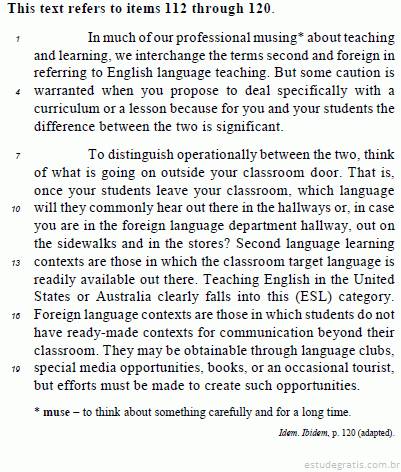
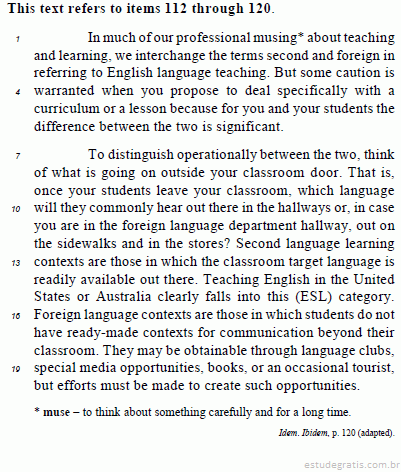
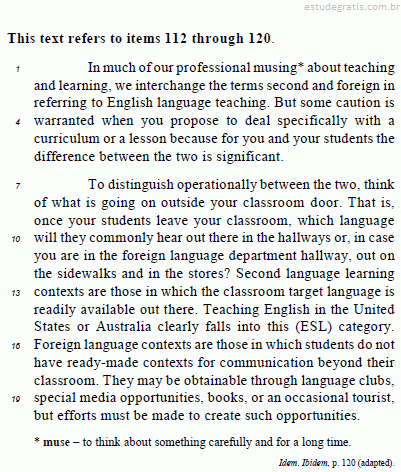
teachers usually make no difference between second and foreign language.

Based on the text, it can be concluded that
even when we are preparing our curriculum or a lesson, the difference between a second and a foreign language is not relevant.

Based on the text, it can be concluded that
a second language is that one you learn in a foreign country where this language is the native language.