In the text,
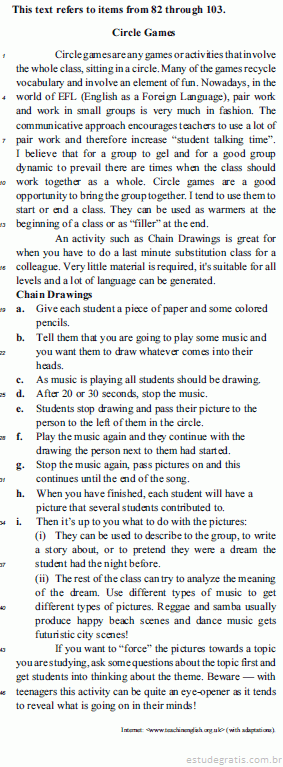
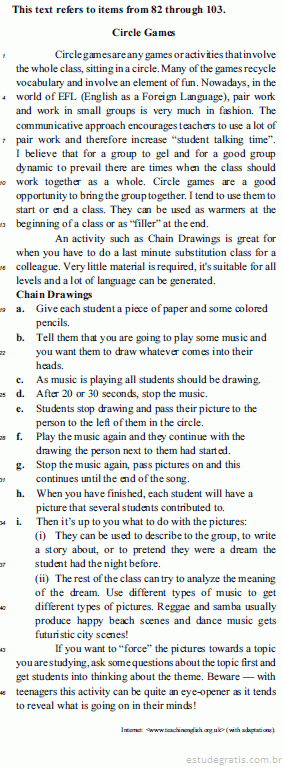
the relative pronouns which and that can be used after the word “topic” (l.43) without changing the meaning of the sentence.
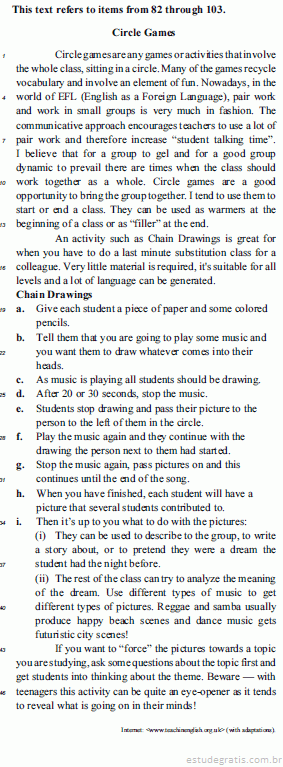
In the text,
the relative pronouns which and that can be used after the word “topic” (l.43) without changing the meaning of the sentence.
In the text,
“thinking” (l.45) is in the -ing form because it comes after a preposition.

In the text,
the verb “Beware” (l.45) implies a warning.

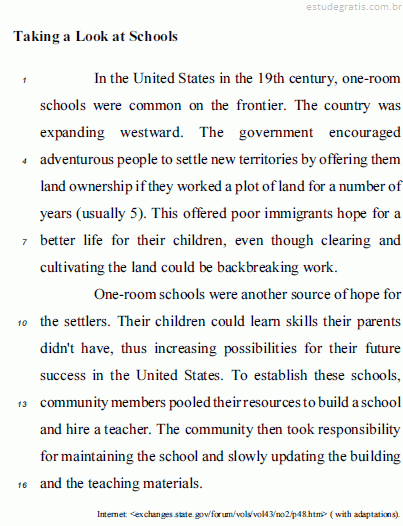
Judge the following items based on the previous text.
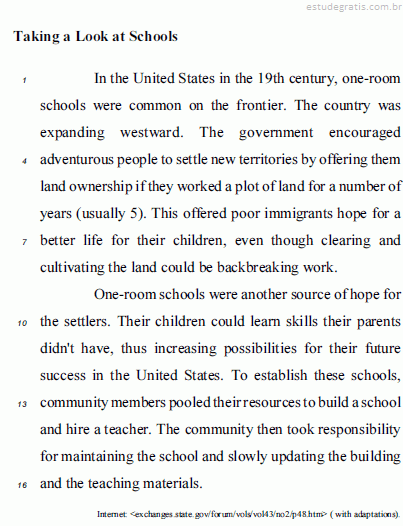
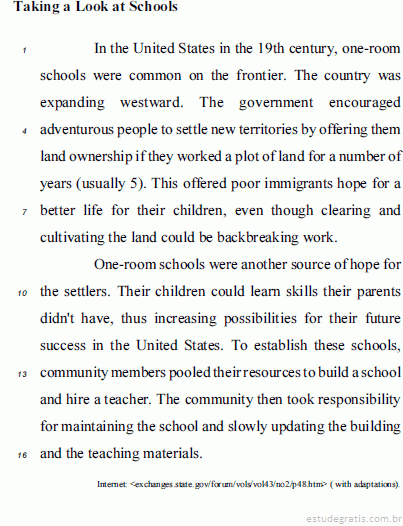
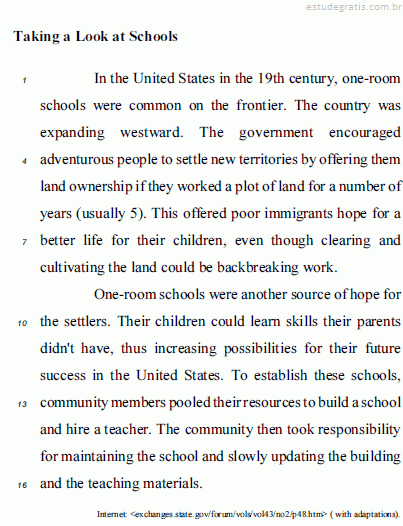
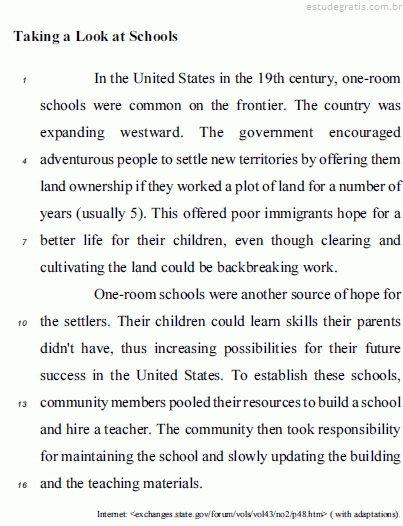
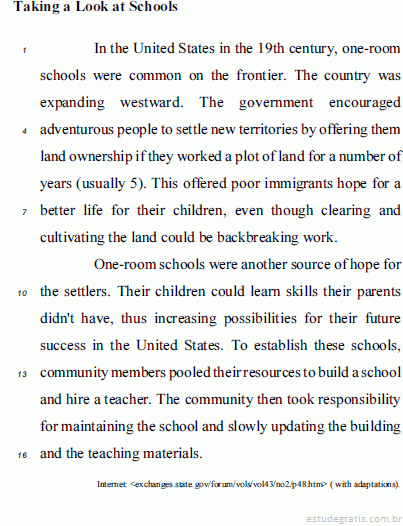
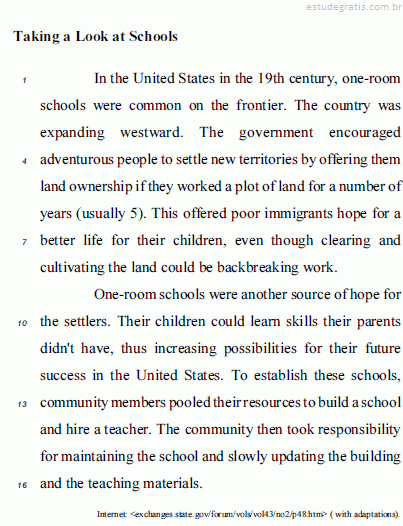
The words “one” and “ room”, separated by a hyphen (R.1), function as an adjective.

Judge the following items based on the previous text.
The verb “were” (l.2) would convey the same idea if it were replaced by had been.

Judge the following items based on the previous text.
The suffix “-ward”, in “westward” (l.3), means in a particular direction.

Judge the following items based on the previous text.
The final “-ed” in “encouraged” (l.3), “worked” (l.5), “offered” (l.6) and “pooled” (l.13) is pronounced the same because its preceding sound is voiced.

Judge the following items based on the previous text.
The verb “settle” (l.4) is to “settlers” (l.10) as teach is to teachers.

Judge the following items based on the previous text.
The verb “clearing” (l.7) can be correctly replaced by to clear.

Judge the following items based on the previous text.
The clause introduced by “even though” (l.7) is a concessive clause.