1931 Q485248
Língua Inglesa
Ano: 2008
Banca: Centro de Seleção e de Promoção de Eventos UnB (CESPE)

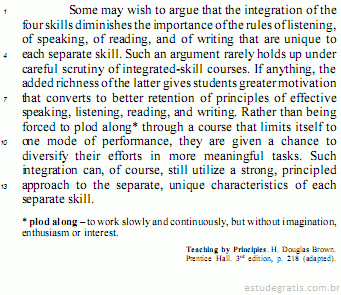
In the text,

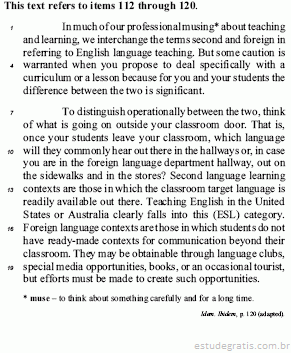
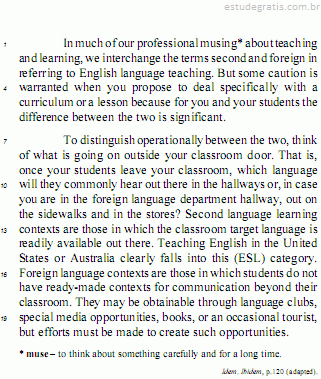
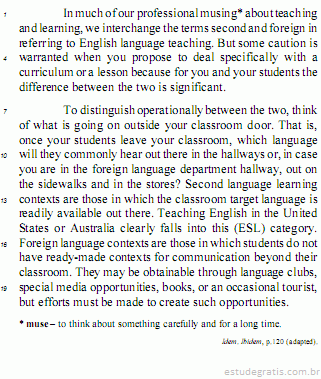
"better" (l.7) is the opposite of worse.
1932 Q485246
Língua Inglesa
Ano: 2008
Banca: Centro de Seleção e de Promoção de Eventos UnB (CESPE)

Based on the text, it can be concluded that

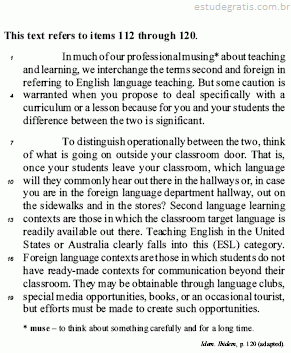
teachers usually make no difference between second and foreign language.

1933 Q485244
Língua Inglesa
Ano: 2008
Banca: Centro de Seleção e de Promoção de Eventos UnB (CESPE)

Based on the text, it can be concluded that

even when we are preparing our curriculum or a lesson, the difference between a second and a foreign language is not relevant.

1934 Q485242
Língua Inglesa
Ano: 2008
Banca: Centro de Seleção e de Promoção de Eventos UnB (CESPE)

Based on the text, it can be concluded that

a second language is that one you learn in a foreign country where this language is the native language.

1935 Q485240
Língua Inglesa
Ano: 2008
Banca: Centro de Seleção e de Promoção de Eventos UnB (CESPE)

Based on the text, it can be concluded that

if you are English and you are learning Portuguese in Brazil, Portuguese will be a second language for you.

1936 Q485238
Língua Inglesa
Ano: 2008
Banca: Centro de Seleção e de Promoção de Eventos UnB (CESPE)

Based on the text, it can be concluded that

English learned in Australia can be considered a foreign language.

1937 Q485236
Língua Inglesa
Ano: 2008
Banca: Centro de Seleção e de Promoção de Eventos UnB (CESPE)

Based on the text, it can be concluded that

a foreign language environment is that one found by a Brazilian learning English in the USA.

1938 Q485234
Língua Inglesa
Ano: 2008
Banca: Centro de Seleção e de Promoção de Eventos UnB (CESPE)

In the text,

"much" (l.1) can be replaced by many.

1939 Q485232
Língua Inglesa
Ano: 2008
Banca: Centro de Seleção e de Promoção de Eventos UnB (CESPE)

In the text,

"readily" (l.14) is synonymous with promptly.

1940 Q485230
Língua Inglesa
Ano: 2008
Banca: Centro de Seleção e de Promoção de Eventos UnB (CESPE)

In the text,

"those" (l.13) refers to "contexts" (l.13).