Based on the text above, judge the items from 84 through 98.
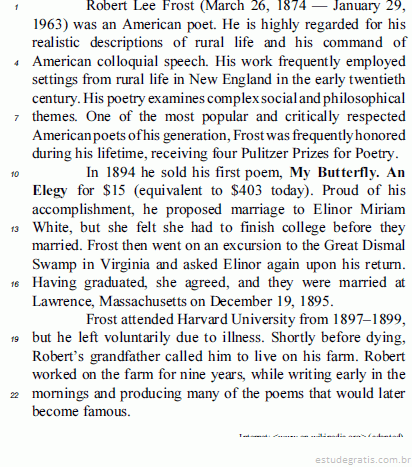
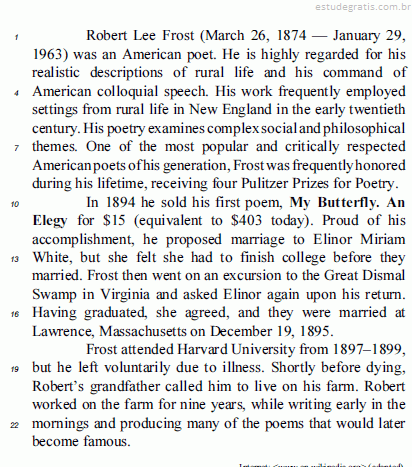
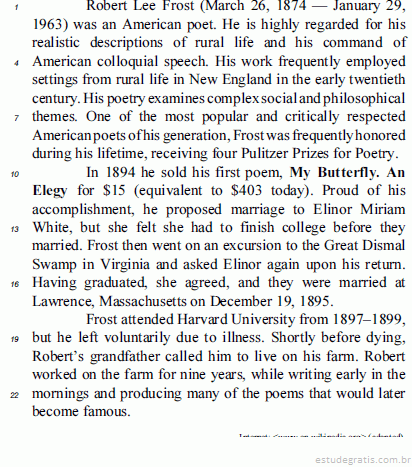
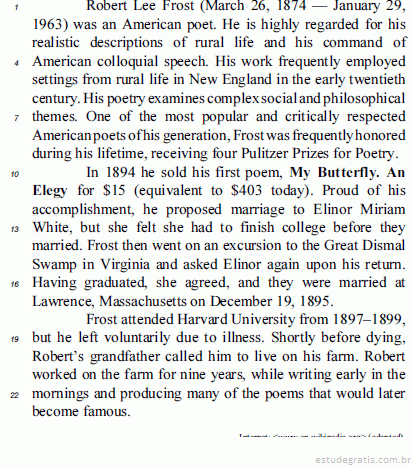
The preposition “in” in the fragment “in 1958” (l.21) can be replaced by on without this constituting a violation of any syntactical rule.
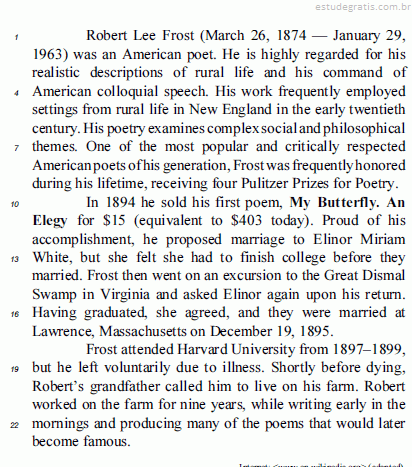
Based on the text above, judge the items from 84 through 98.
The preposition “in” in the fragment “in 1958” (l.21) can be replaced by on without this constituting a violation of any syntactical rule.
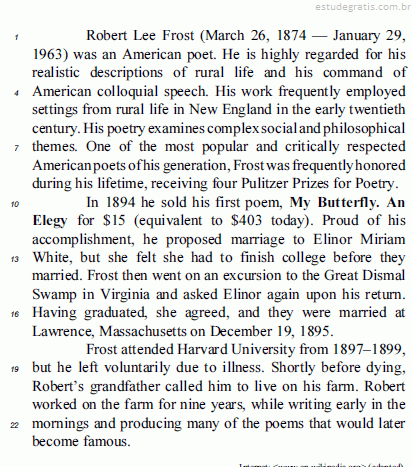
Based on the text above, judge the items from 99 through 106.
The words “highly” (l.2), “frequently” (l.4) and “critically” (l.7) are examples of adverbs.

Based on the text above, judge the items from 99 through 106.
The adverb “then” (l.14) indicates, in this context, in that time.

Based on the text above, judge the items from 99 through 106.
The word “later” (l.22) is, in this context, the comparative form of the adjective late.

Based on the text above, judge the items from 99 through 106.
The word “respected” (l.7) is a verb in the simple past.

Based on the text above, judge the items from 99 through 106.
The word “philosophical” (l.6) is an adjective formed with the addition of a suffix to a noun.

Based on the text above, judge the items from 99 through 106.
The sentence “One of the most popular and critically respected American poets of his generation, Frost was frequently honored during his lifetime, receiving four Pulitzer Prizes for Poetry.” (l.7-9) contains a passive voice construction.

Based on the text above, judge the items from 99 through 106.
The word “felt” (l.13) is the past of the verb fall.

Based on the text above, judge the following items.
The article criticizes the reader who uses any of the passwords listed on the compilation prepared by SplashData.

Based on the text above, judge the following items.
It can be concluded from the text that the word “welcome” is the default password for many services.