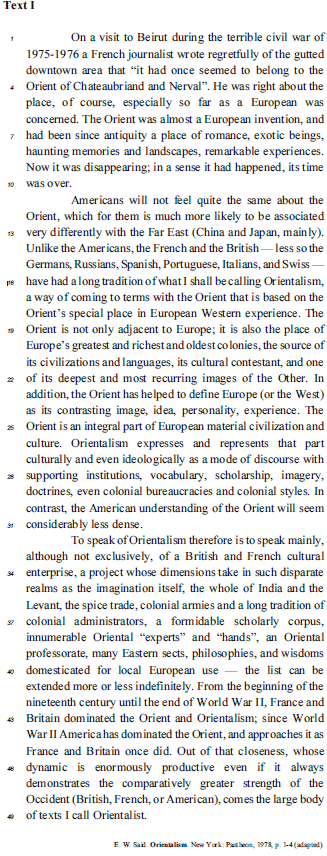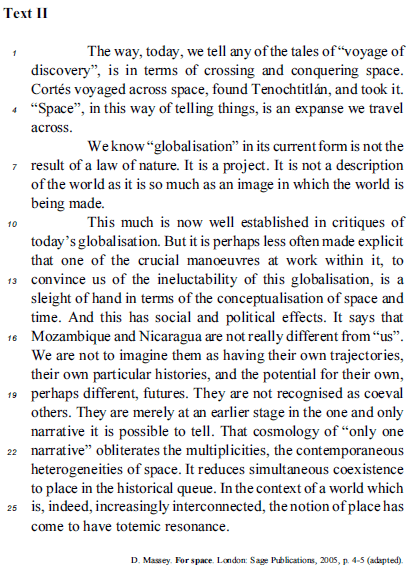
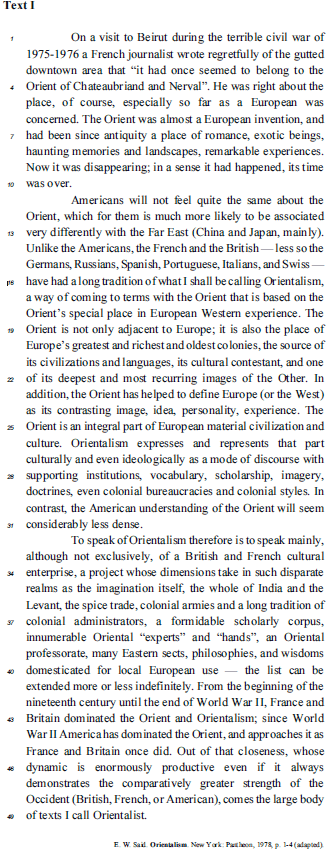
Considering the grammatical and semantic aspects of text I, decide whether the following items are right (C) or wrong (E).
The adjective remarkable (l.8) could be replaced by significant or uncanny in the context of the text.
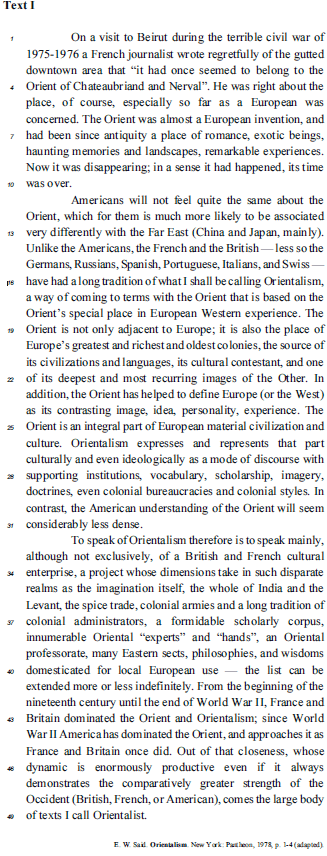
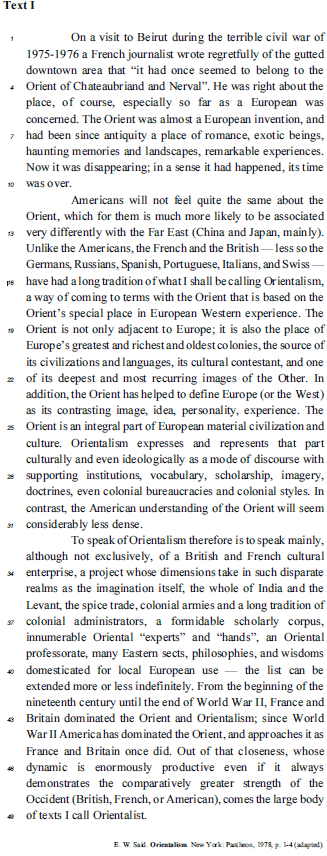
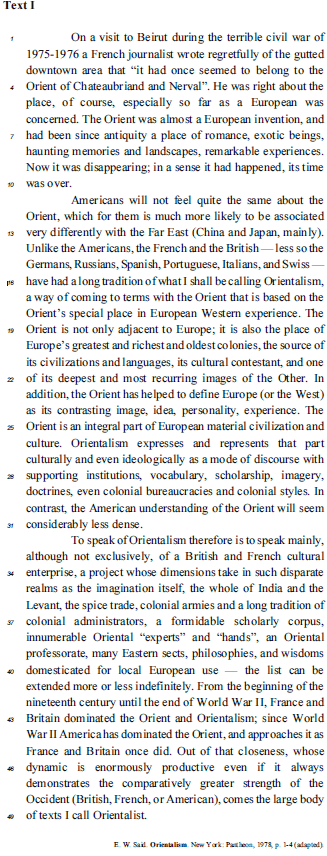
Considering the grammatical and semantic aspects of text I, decide whether the following items are right (C) or wrong (E).
The adjective remarkable (l.8) could be replaced by significant or uncanny in the context of the text.
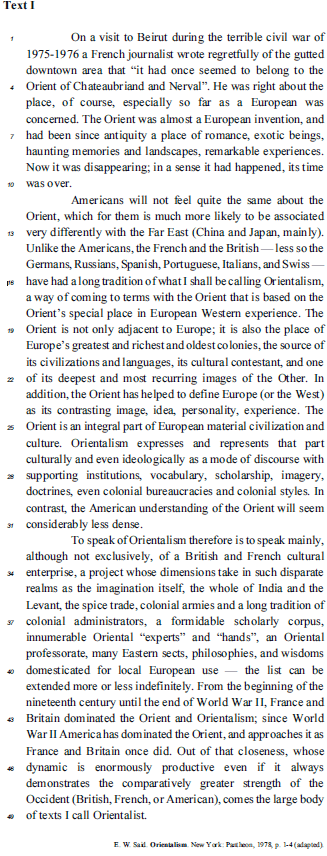
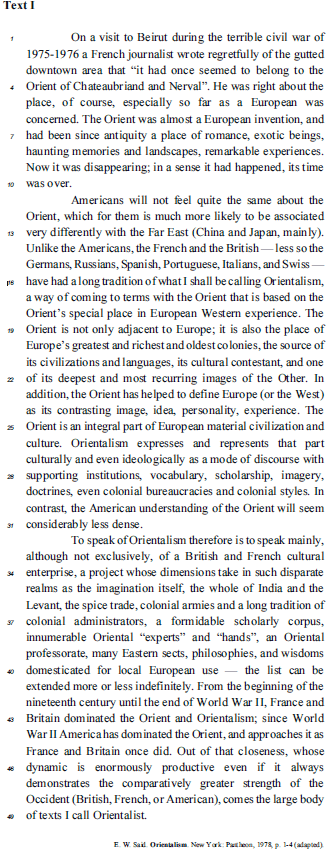
According to text I, decide whether the following statements are right (C) or wrong (E).
The notion of Orientalism, which the author intends to investigate, is built upon a volume of written texts throughout the centuries.
According to text I, decide whether the following statements are right (C) or wrong (E).
The Orient has taken part in molding the contemporary European experience.
According to text I, decide whether the following statements are right (C) or wrong (E).
The British and French tradition of Orientalism is forged through the colonial experience and academic corpora.
According to text I, decide whether the following statements are right (C) or wrong (E).
Presently, America situates itself in a different position towards the Orient, regarding British and French perspectives.
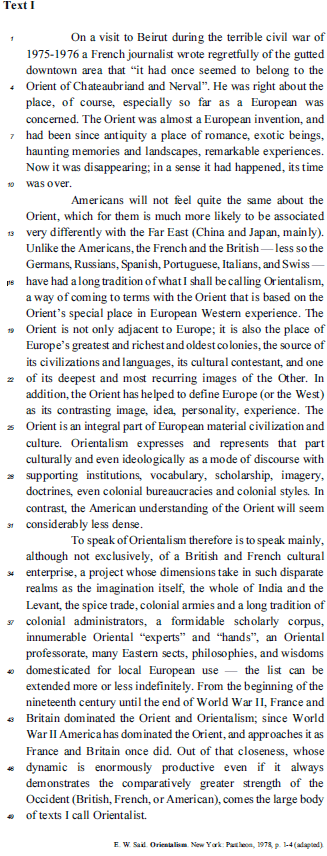
In text I, without altering the meaning of the sentence, the noun realms (l.35) could be replaced by (mark right C or wrong E):
spheres.
In text I, without altering the meaning of the sentence, the noun realms (l.35) could be replaced by (mark right C or wrong E):
domains.
In text I, without altering the meaning of the sentence, the noun realms (l.35) could be replaced by (mark right C or wrong E):
divisions.
Considering the ideas and the vocabulary of text II, decide whether the statements below are right (C) or wrong (E).
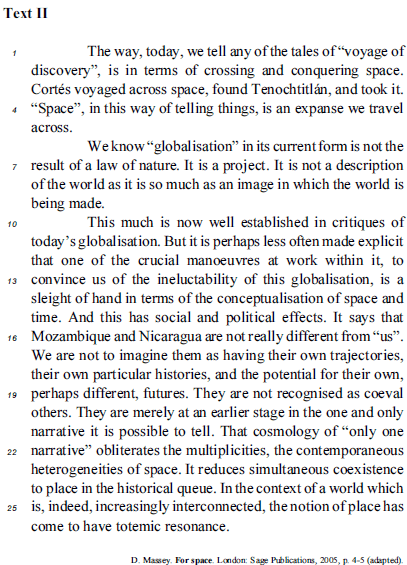
The author asserts that, even though space is an extension to be travelled, it is nowadays intertwined with the notion of time.
Considering the ideas and the vocabulary of text II, decide whether the statements below are right (C) or wrong (E).
The adjective coeval (l.19) could be replaced by coetaneous without changing the meaning of the sentence.