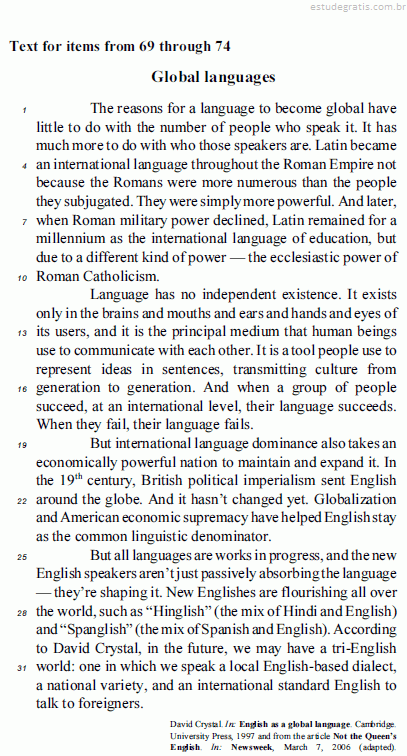
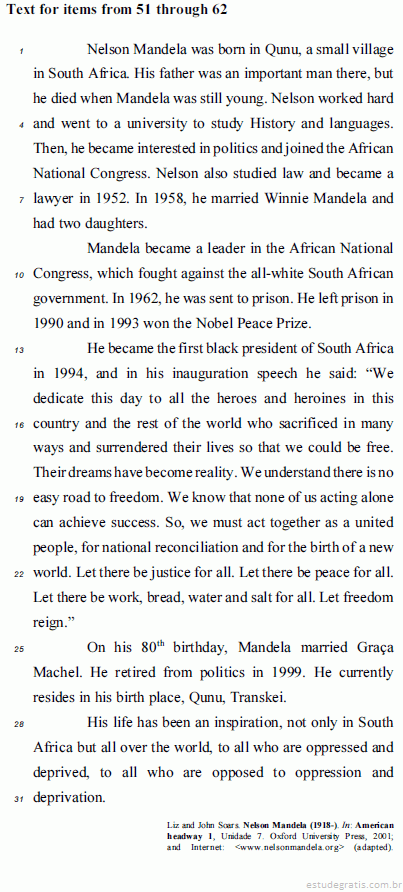
Regarding the verb forms and verb tenses used in the preceding text, judge the items below.
In the clause “who are opposed to oppression and deprivation” (l.30-31), the verb is in the passive voice.
Regarding the verb forms and verb tenses used in the preceding text, judge the items below.
In the clause “who are opposed to oppression and deprivation” (l.30-31), the verb is in the passive voice.Consider the following sentence: “If I had some more time, I would do many other things like visiting you more often. Actually, I have been so busy that I have had to work on the weekends, too.”
With respect to the sentence above, judge the items that follow.
The clause “If I had some more time” is in the conditional.Consider the following sentence: “If I had some more time, I would do many other things like visiting you more often. Actually, I have been so busy that I have had to work on the weekends, too.”
With respect to the sentence above, judge the items that follow.
The word “Actually” is a false cognate.Consider the following sentence: “If I had some more time, I would do many other things like visiting you more often. Actually, I have been so busy that I have had to work on the weekends, too.”
With respect to the sentence above, judge the items that follow.
In this sentence, it is grammatically correct to replace the infinitive form “to work” with the gerund form “working”.
In relation to grammar aspects, judge the following items.
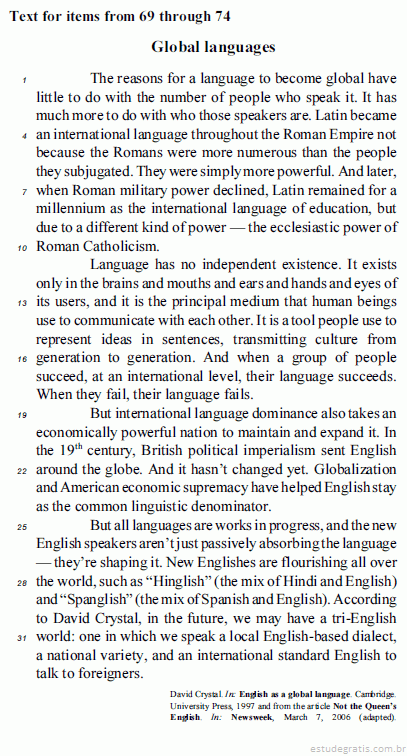
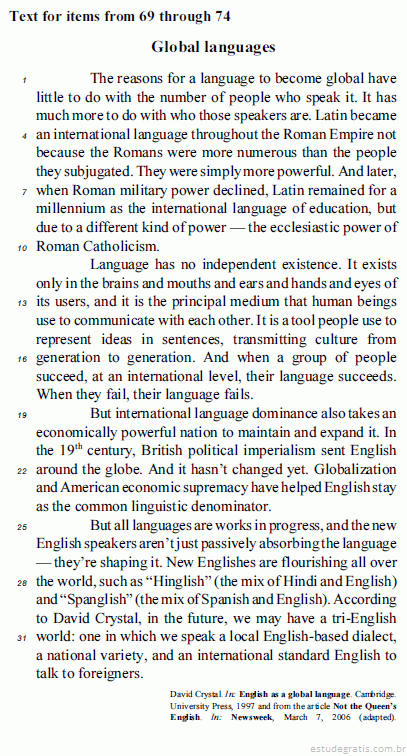
The word “but” (l.8) is a conjunction and it expresses addition.
In relation to grammar aspects, judge the following items.
The number “19th” (l.21) is a cardinal number.
In relation to grammar aspects, judge the following items.
In the clause “they’re shaping it” (l.27), the verb is in the present continuous tense and the verb to be is the auxiliary verb.