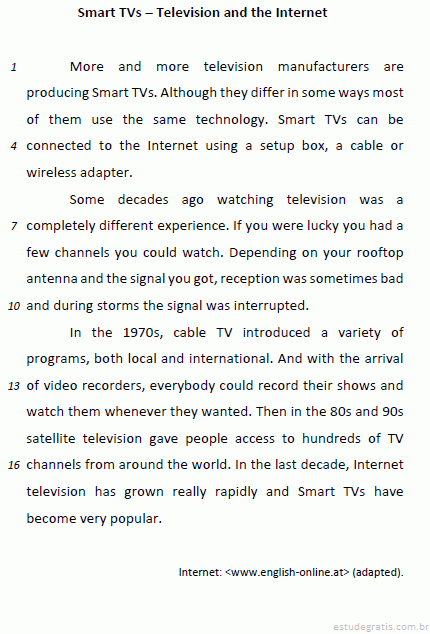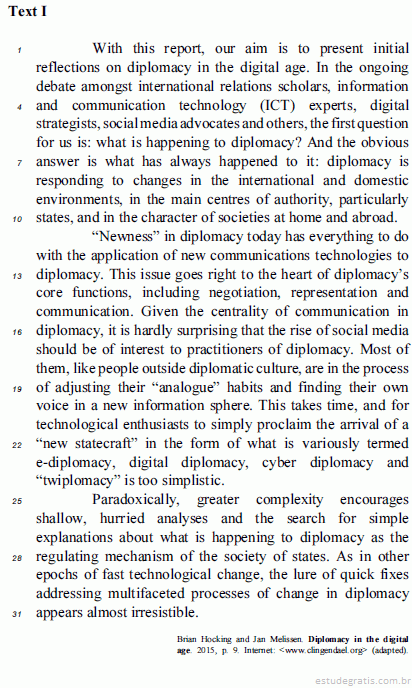
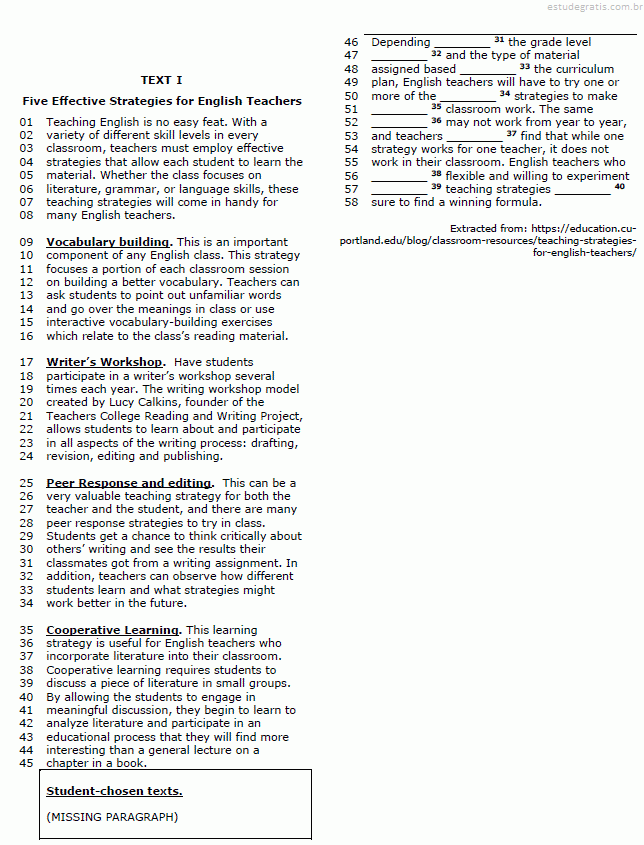
Mark the option that correctly completes the numbered blanks (31–40) in Text I.
2161
Q705920
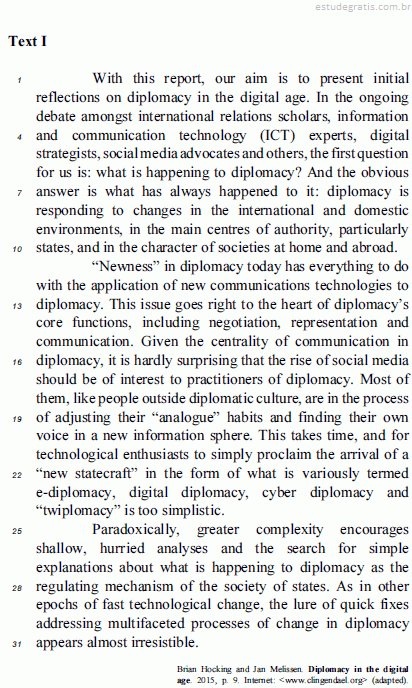
Mark the option that correctly completes the numbered blanks (31–40) in Text I.
2162
Q705919
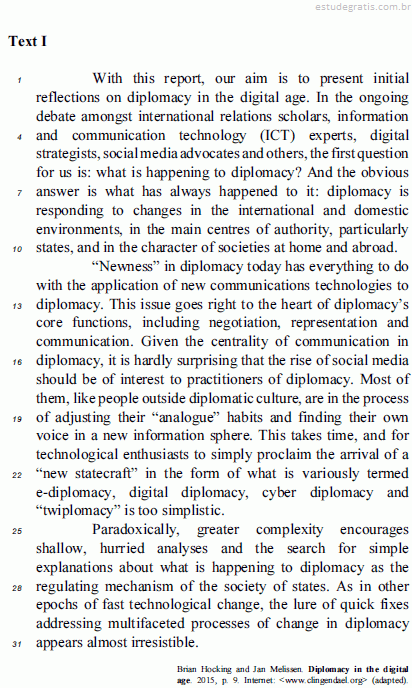
Mark the option that correctly completes the numbered blanks (31–40) in Text I.
2163
Q705918
Mark the option that correctly completes the numbered blanks (31–40) in Text I.
2164
Q705917
Mark the option that correctly completes the numbered blanks (31–40) in Text I.
2165
Q705916

Based on the text, judge the following items.
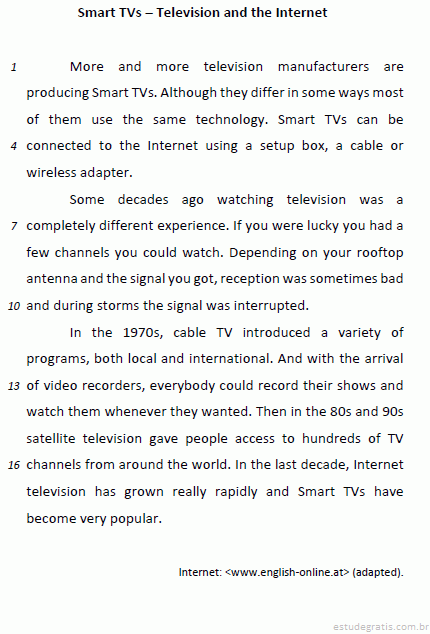
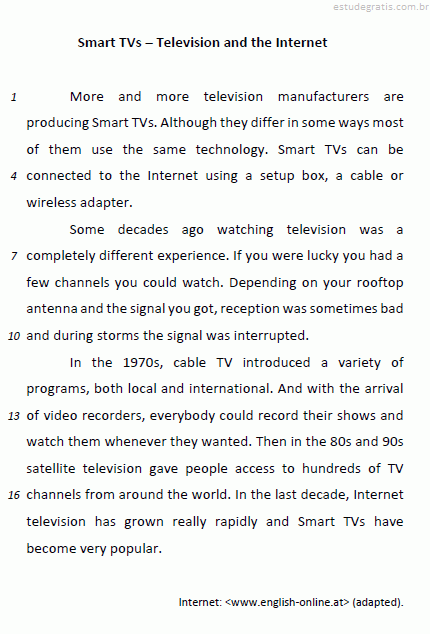
“most of them” (lines 2 and 3) and the majority of them are synonymous expressions.
2166
Q705915

Based on the text, judge the following items.
“bad” in “reception was sometimes bad” (line 9) is not the contrary of better.
2167
Q705914

Based on the text, judge the following items.
“everybody” in “everybody could record” (line 13) and somebody are synonyms.
2168
Q705908

Decide whether the following statements are right (C) or wrong (E) according to text I.
In the first paragraph, the words “ongoing” (l.2) and “advocates” (l.5) can be correctly and respectively replaced by far-reaching and lawyers without this changing the meaning of the passage.
2169
Q705907

Decide whether the following statements are right (C) or wrong (E) according to text I.
The passage “what has always happened to it:” (l.7) can be correctly replaced by what has always happened to it, which means that or by what has always happened to it, which is to say.
2170
Q705906

Decide whether the following statements are right (C) or wrong (E) according to text I.
In the end of the second paragraph, the authors express the opinion that the so-called ‘new statecraft’(l.22), also known as “digital diplomacy” (l.23), is “too simplistic” (l.24).