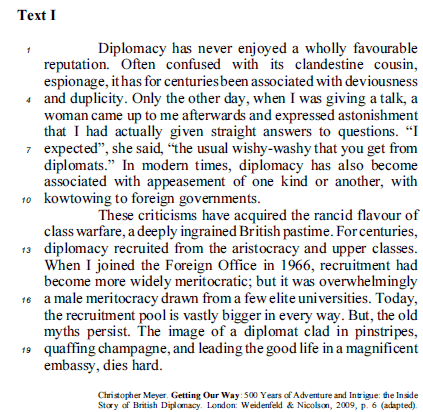
Decide whether the following statements are right (C) or wrong (E) according to text I.
The woman mentioned in the first paragraph didnt expect the author to reveal his true opinions.
Decide whether the following statements are right (C) or wrong (E) according to text I.
The woman mentioned in the first paragraph didnt expect the author to reveal his true opinions.
Considering the grammatical and semantic aspects of text I, decide whether the following items are right (C) or wrong (E).
The recruitment policy of the British diplomatic service was designed and planned by elite academics and university intellectuals.
Considering the ideas and the vocabulary of text II, decide whether the statements below are right (C) or wrong (E).
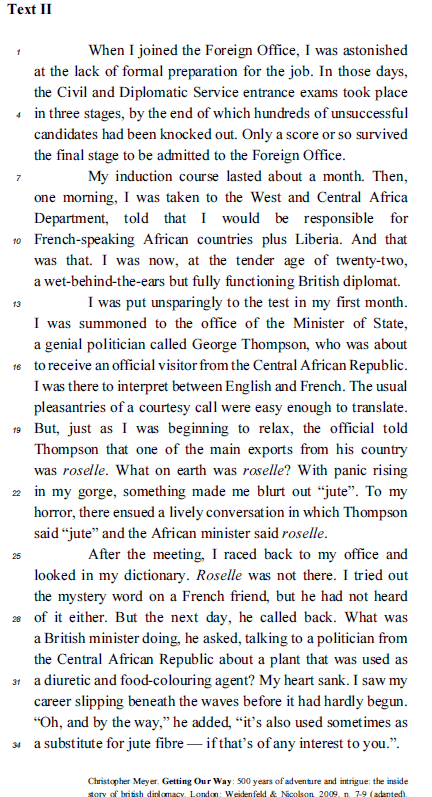
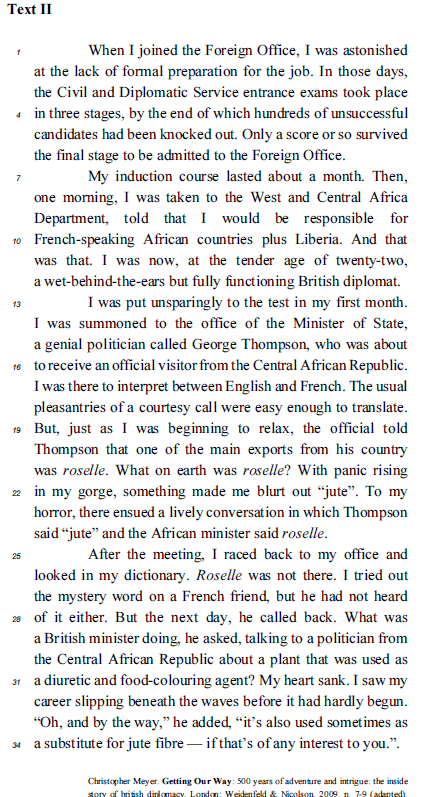
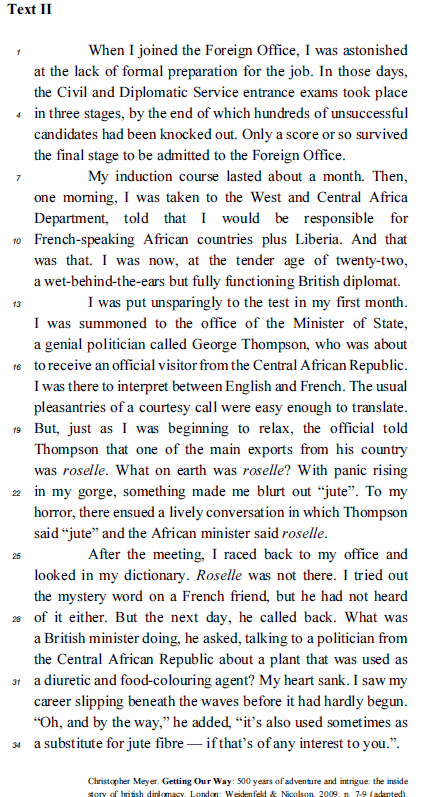
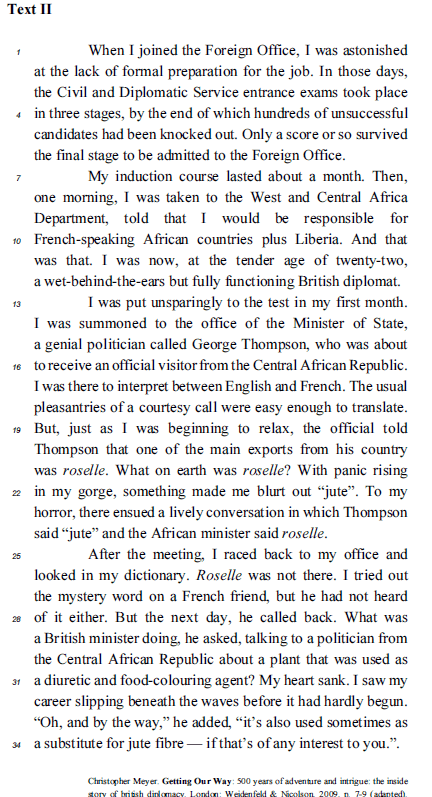
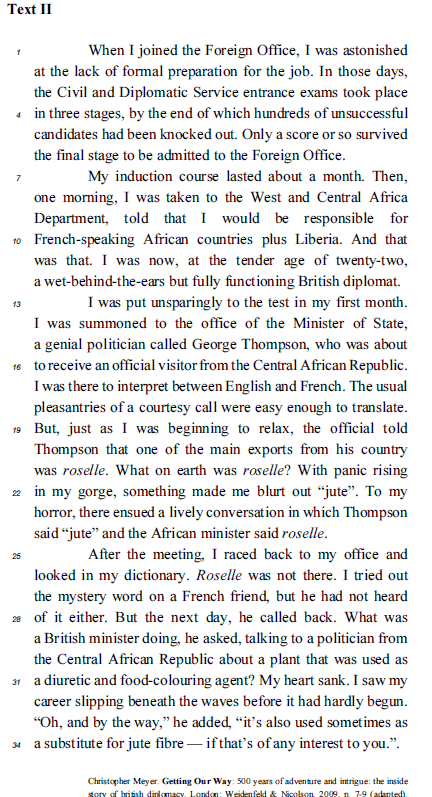
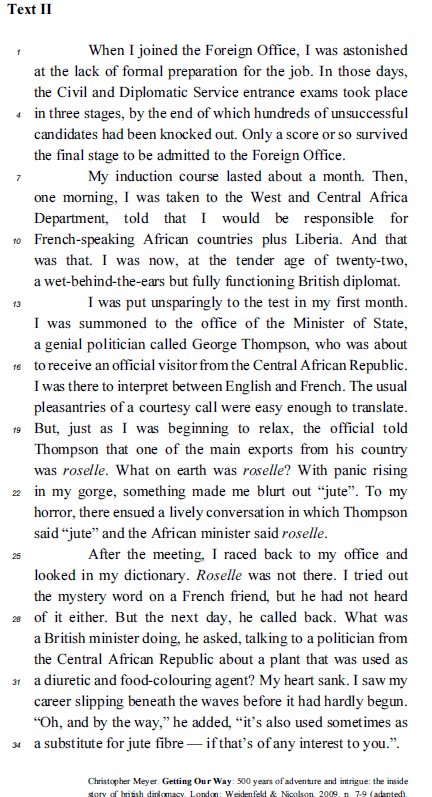
After all stages of the Civil and Diplomatic Service entrance exams, the number of candidates admitted was around 20.
Considering the ideas and the vocabulary of text II, decide whether the statements below are right (C) or wrong (E).
With the expression And that was that (l. 10 and 11), the author reinforces the idea indicated by the lack of formal preparation for the job (l.2).
Considering the ideas and the vocabulary of text II, decide whether the statements below are right (C) or wrong (E).
It can be correctly inferred that, when it came to hiring, the Foreign Office had a clear preference for bright young people.
Decide whether the statements below, which concern the ideas of text II and the vocabulary used in it, are right (C) or wrong (E).
The fact that the author didnt know the meaning of the word roselle and translated it as jute was prejudicial to the British Minister.
Decide whether the statements below, which concern the ideas of text II and the vocabulary used in it, are right (C) or wrong (E).
The passage a wet-behind-the-ears but fully functioning British diplomat (l.12) indicates that the authors inexperience didnt prevent him from getting a position of responsibility in the Foreign Office.
Decide whether the statements below, which concern the ideas of text II and the vocabulary used in it, are right (C) or wrong (E).
From the authors account, it can be correctly inferred that he was expected to be able to translate from French to English and vice versa, as part of his job as a diplomat.
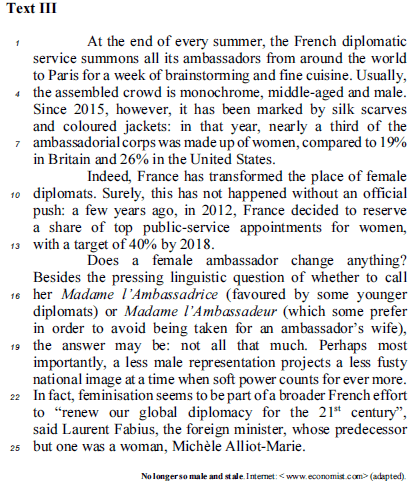
!FimDoTexto! Decide whether the statements below, concerning the ideas and the vocabulary of text III, are right (C) or wrong (E).
In spite of some passages which might be taken as ironic, it is correct to conclude that the text considers the changes in French diplomacy to be positive.
!FimDoTexto! Decide whether the statements below, concerning the ideas and the vocabulary of text III, are right (C) or wrong (E).
According to the text, the foreign minister Laurent Fabius was appointed immediately after Mrs. Alliot-Maries term.