
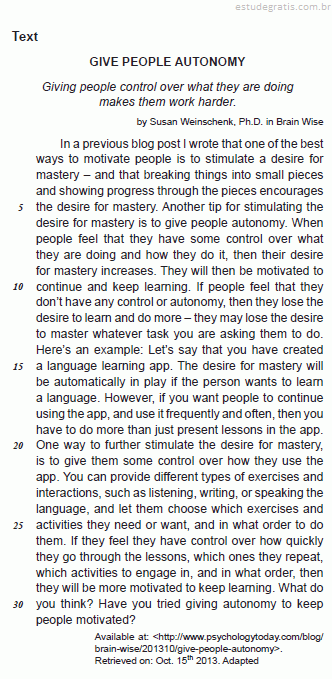
In the sentence of the text: “They will then be motivated to continue and keep learning” (lines 9-10), the pronoun they refers to
4521
Q487313
In the sentence of the text: “They will then be motivated to continue and keep learning” (lines 9-10), the pronoun they refers to
4522
Q484960
Questions 21 to 28 address both the teaching of English as a foreign language and the Parâmetros Curriculares Nacionais – PCN. Read them and mark the right alternative: One teaching objective left out of the PCN is that the curriculum:
4523
Q484958
Questions 21 to 28 address both the teaching of English as a foreign language and the Parâmetros Curriculares Nacionais – PCN. Read them and mark the right alternative: Among the numerous educational rights pertaining to the Brazilian citizen, the PCN stress one in particular, namely, that every learner:
4524
Q484956
Questions 21 to 28 address both the teaching of English as a foreign language and the Parâmetros Curriculares Nacionais – PCN. Read them and mark the right alternative: The development of a specific foreign language ability may be hindered by the:
4525
Q484954
Questions 21 to 28 address both the teaching of English as a foreign language and the Parâmetros Curriculares Nacionais – PCN. Read them and mark the right alternative: The PCN claim that starting from what language learners know already is crucial. The reason why this is so is that learners can then:
4526
Q484952
Questions 21 to 28 address both the teaching of English as a foreign language and the Parâmetros Curriculares Nacionais – PCN. Read them and mark the right alternative: The orientation which probably best describes the PCN is the focus on:
4527
Q484950
Questions 21 to 28 address both the teaching of English as a foreign language and the Parâmetros Curriculares Nacionais – PCN. Read them and mark the right alternative: Harmer (1998:68) claims that the greatest controversy about the suitability of reading texts for English language students is centred on whether the texts are:
4528
Q484948
PPP stands for Presentation, Practice and Production and has been claimed to be specifically useful in a language lesson. Harmer (1998: 31) describes this to be:
4529
Q484946
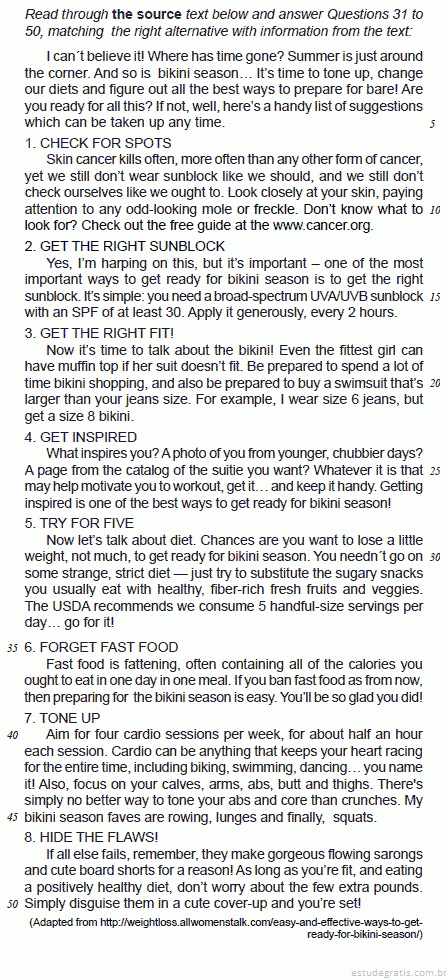
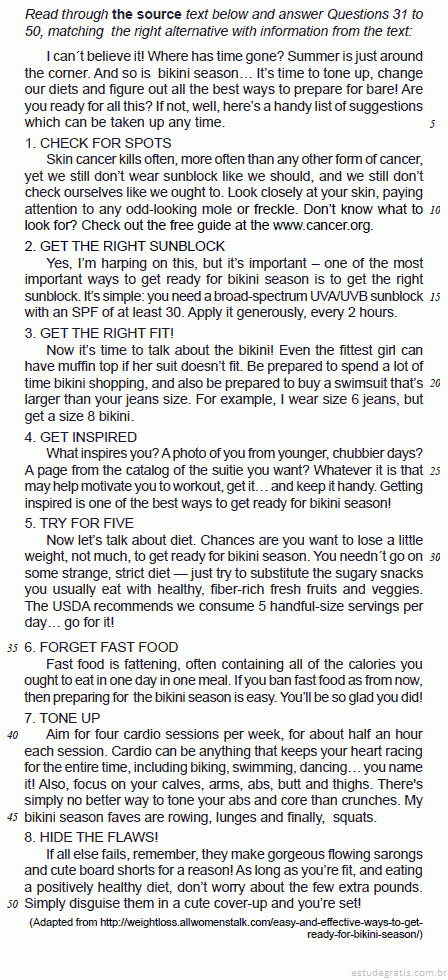
Processes of word formation such as Derivation (“suitie” - (line 25)) and Clipping (“fave” - (line 45)) present in the source text suggest that it aims most specifically at:
4530
Q484944
Tag questions are short questions normally used to check information or ask for agreement. The right tag question for “Now let’s talk about diet” (line 29) is: