
731
Q479864
 An idiom has been defined as a lexical item (usually a phrase or a clause) whose meaning cannot be derived from the sum of its parts. The idiom in “summer is just around the corner” (line 1-2) means that “summer is:
  The action involved in “to get around a problem” is to:
  The lexical item ´handy´ is used in “Here´s a handy list” (line 4) and “keep it handy” (line 26). In each instance it means respectively:
  The only alternative below which in the text conveys the meaning of ´manner´is:
 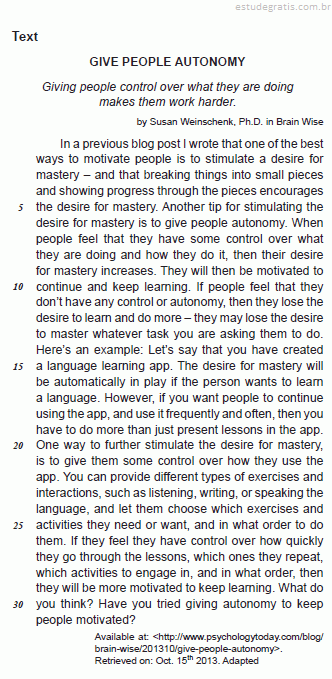 In the fragments of the text: “they may lose the desire to master whatever task you are asking them to do” (lines 12-13) and “then you have to do more than just present lessons in the app” (lines 18-19), the verb forms in bold express the ideas, respectively, of
 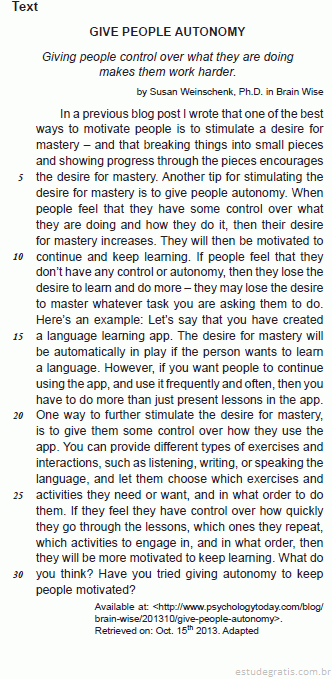 In the sentence of the text: “However, if you want people to continue using the app, and use it frequently and often, then you have to do more than just present lessons in the app” (lines 17-19), the connector However can be replaced, without any change in meaning, by
  No contexto, o trecho “… a better way to develop, deploy, and manage data-tier applications” pode ser traduzido, mantendo-se o sentido, para:
  O texto informa que uma consequência do aumento de aplicações que utilizam banco de dados e da existência de hardware com baixo custo e alta capacidade de armazenamento foi
 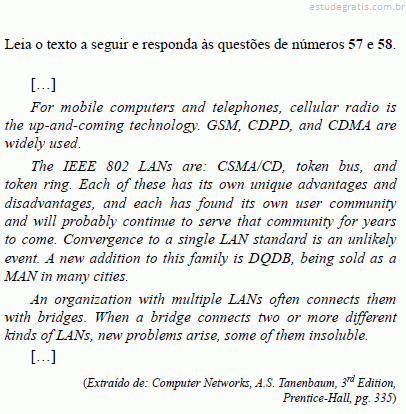 Considerando o contexto, o termo grifado em “… new problems arise …” pode ser traduzido como: