Considering the grammatical and semantic aspects of text IV, decide whether the following items are right (C) or wrong (E).
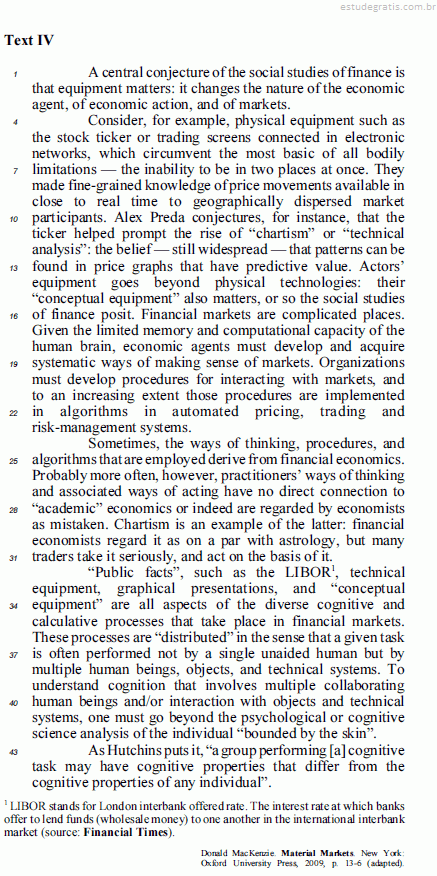
Using based on instead of “on the basis of” (l.31) would not alter the general meaning of the sentence.
Considering the grammatical and semantic aspects of text IV, decide whether the following items are right (C) or wrong (E).
Using based on instead of “on the basis of” (l.31) would not alter the general meaning of the sentence.
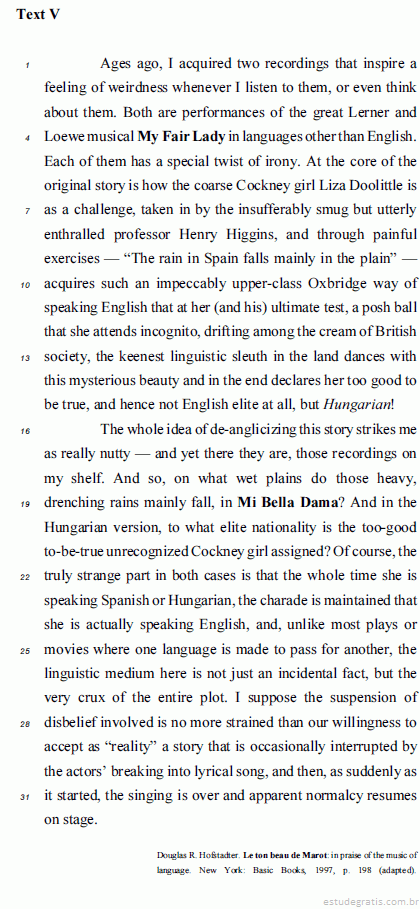
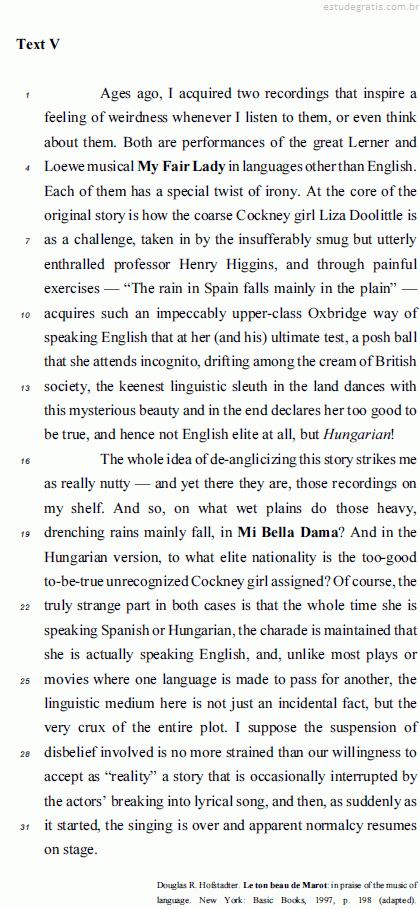
In text V, without altering the general meaning of the sentence, “enthralled” (R.8) could be replaced by (mark right — C — or wrong — E)
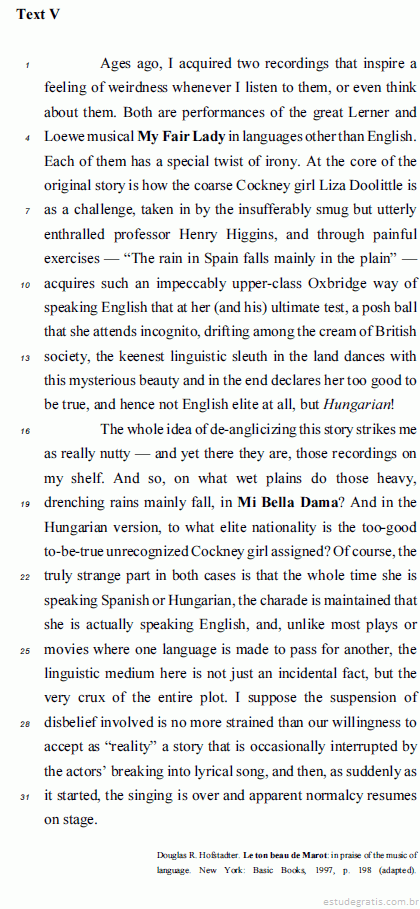
bewitched.
In text V, without altering the general meaning of the sentence, “enthralled” (R.8) could be replaced by (mark right — C — or wrong — E)
captivated.
In text V, without altering the general meaning of the sentence, “enthralled” (R.8) could be replaced by (mark right — C — or wrong — E)
eccentric.
In text V, without altering the general meaning of the sentence, “enthralled” (R.8) could be replaced by (mark right — C — or wrong — E)
colorful.
Considering the grammatical and semantic aspects of text VI, decide whether the following items are right (C) or wrong (E).
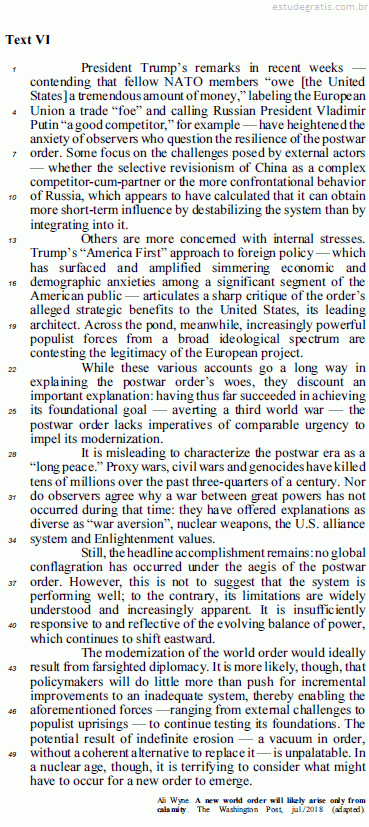
The word “aegis” (l.36) could be replaced by auspices in this particular context.
Considering the grammatical and semantic aspects of text VI, decide whether the following items are right (C) or wrong (E).
The idiom “Across the pond” (l.19) could be replaced by Overseas, without altering the meaning of the sentence.
Considering the grammatical and semantic aspects of text VI, decide whether the following items are right (C) or wrong (E).
The word “simmering” (l.15) could be replaced by vocal without altering the general meaning of the passage.
Based on text CB1A5AAA, judge the following items.
The words “unaware” (l.12) and “wary” (l.16) are related in terms of meaning, being both connected to the notion of caution and attention.
Based on text CB1A5BBB, judge the following items.
In the fragment “on becoming director of the American National Security Agency” (l. 9 and 10), the preposition “on” refers to a period when the action is taking place.