
1
Q487354
In “who call themselves” (l.1), “who” is
In “who call themselves” (l.1), “who” is
The word “But” (l.5) is
The noun “illiteracy” in “the cycle of illiteracy” (l.6-7)
The verb form “written” in “written in simple, conversational prose” (l.8-9) is in the
In the sentence “The rainbow troops must constantly defend their extremely poor school against plans to close it” (R.15-16), the modal verb “must” expresses
In the clause “When I first met my friend Carol” (l.1), the verbal form is in the
If the clause “she was the luckiest woman alive” (l.2) had been used in the simple present tense, the verbal form “was” should be replaced by
In the clause ‘the greatest guy you could meet’ (l.4), the modal verb “could” expresses
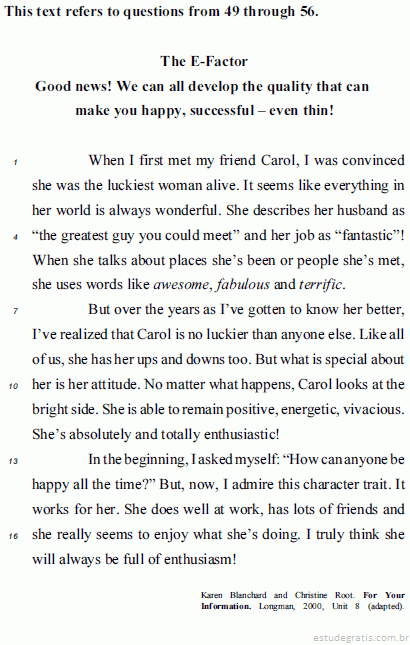
The clauses in “places she’s been or people she’s met” (l.5) are in the
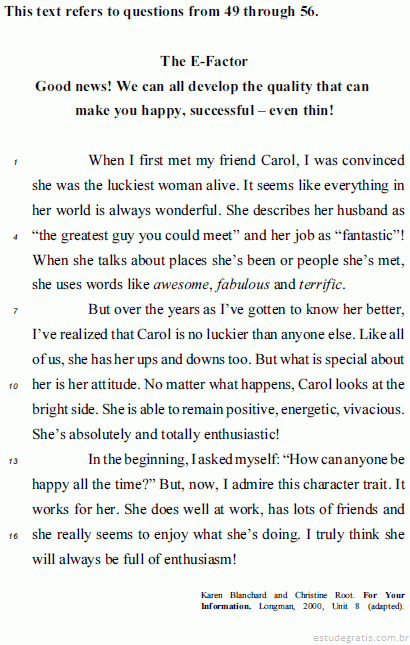
The words “awesome”, “fabulous” and “terrific” (l.6) are