
1131
Q487857
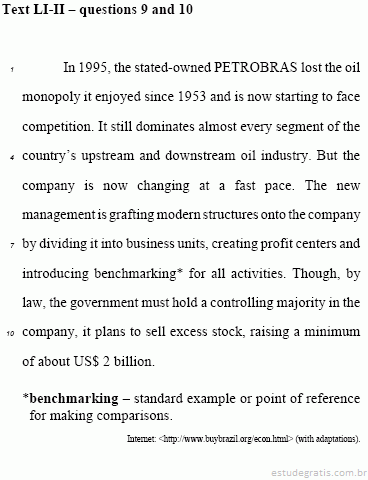
In text LI-II,
"it" (•.10) refers to PETROBRAS.
In text LI-II,
"it" (•.10) refers to PETROBRAS.Read the text below in order to answer questions 21 to 23:
THE PROPOSED BUDGET FOR 2000
The proposed budget for 2000 is fully consistent with the four-year plan for 2000-03 ("Avança Brasil"), also submitted to Congress at the end of August 1999. This plan identifies the federal expenditure programmes that are to receive priority in the allocation of budgetary resources over the next four years, reflecting the main governmental objectives in the social, infrastructure and other public expenditure areas. It seeks to exploit regional and cross-projects synergies, and to attract partnerships with the other levels of government, the public enterprises, the multilateral development banks, and the private sector, to pro...
A typical computer system provides a hierarchy of different types of memories for data storage. Consider the statements below.
I. The hard drive has a local data cache. Because the hard drive access speed is so much slower, disk access are normally done asynchronously at the hardware level. The hard drive controller will acknowledge the instruction right away, and will take sometime to populate the disk cache with the requested data block, and then, at a later time, raise an interrupt to notify the interested party that the data access is complete. This model of interrupt based data transfer is asynchronous.
II. The cache is made up of small chunks of mirrored main memory. The size of these chunks is called the line size, and is typically something like 32 or 64 byte...
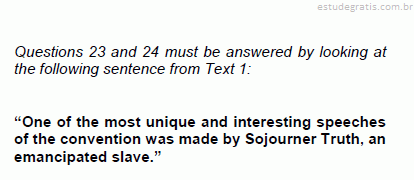
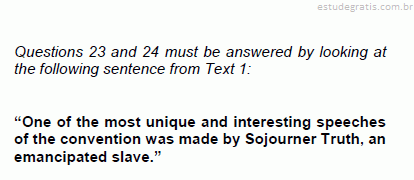 Without any other change added to the sentence, the clause “an emancipated slave” could be preceded by:
  The word “whole-souled” in the clause “her whole-souled, earnest gesture” can be defined as:
 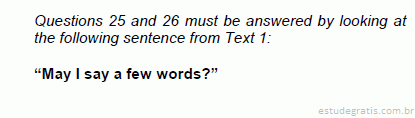 We may keep the sentence grammatically correct by substituting “May” for:
 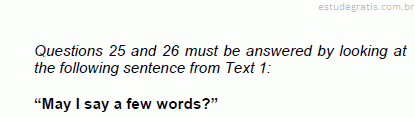 We may keep the sentence grammatically correct by substituting “words” for: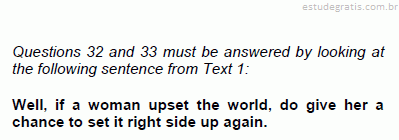
The use of “well” in the beginning of the sentence is a very common feature of cohesion in spoken discourse and is usually used for:
I softening and correcting.
II gaining time.
III referring to your own expectations.
IV indicating you don’t need any help.
The only correct ways to finish the assertion are:
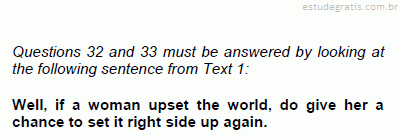 The use of “do” in the sentence is:
 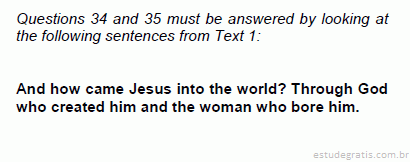 Looking at verb “come into” above, it’s correct to say that:
  It’s correct to say that “And” and “Through” in the sentences above are used, respectively:
 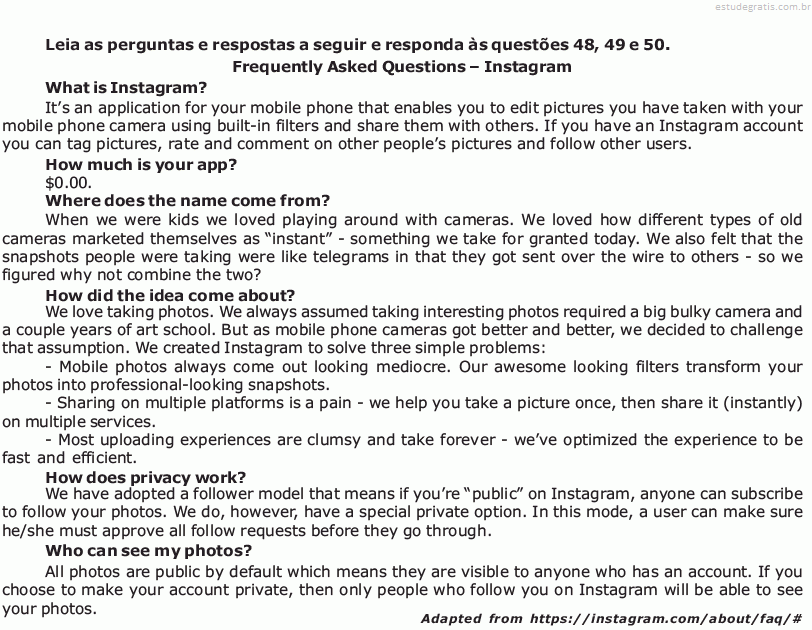 Which words are synonyms for photos in the text?
 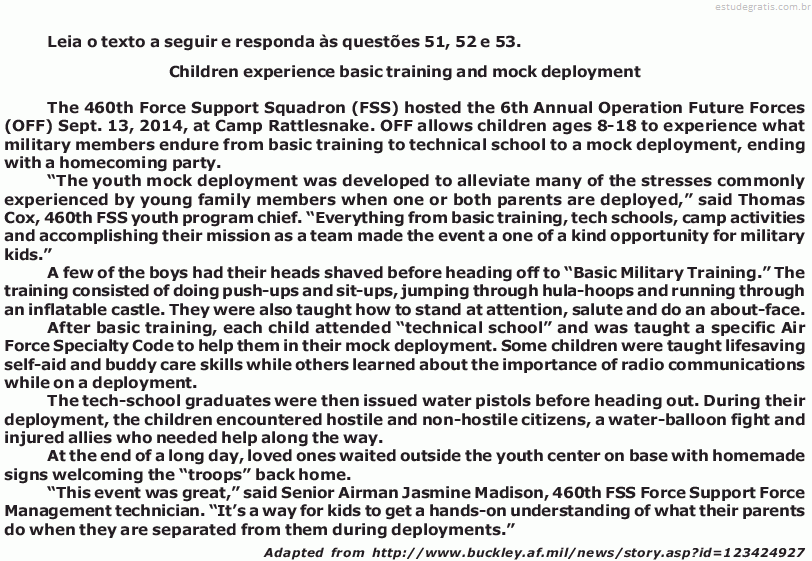 In the sentence “During their deployment, the children encountered hostile and non-hostile citizens, a water-balloon fight and injured allies who needed help along the way.” (paragraph 5), the words their and who respectively refer to
 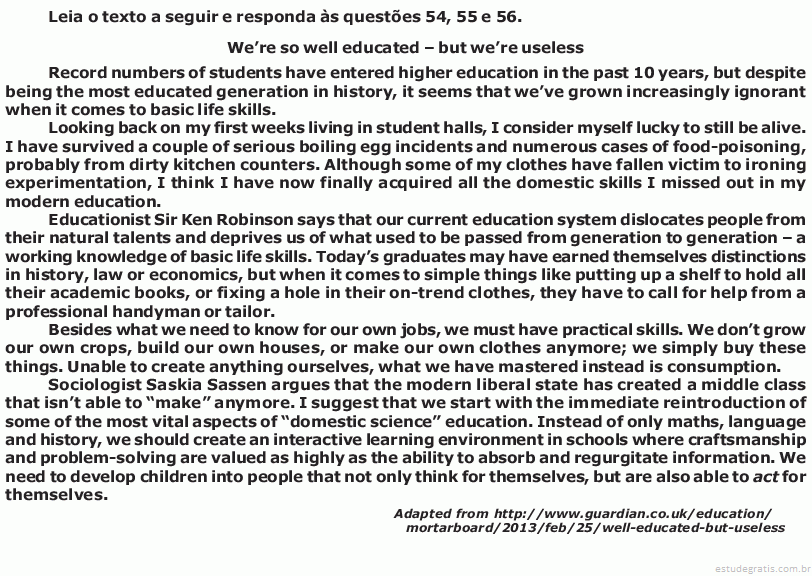 In the sentence “I think I have now finally acquired all the domestic skills I missed out in my modern education.” (paragraph 2), the words missed out mean
  In the sentence “Besides what we need to know for our own jobs, we must have practical skills.” (paragraph 4), the word besides can be replaced by
  Choose the alternative containing the correct verbal tense to complete gap (1) in paragraph 3.
  Choose the alternative that correctly substitutes the word bypassing in the sentence “... bypassing traditional modes of legislation-making ...” (paragraph 1).
  Choose the alternative that has the sentence “Operation Desert Storm was not won by smart weaponry” (paragraph 2) correctly changed into active voice.
 Choose the alternative that presents the passive voice of the sentence below.
The expanding Hispanic population in the U.S. still hasn’t created a market for Spanish-language pictures.
Choose the correct form for the passive voice of the following sentence.
‘They have taken her to the hospital.’
Choose the alternative that best completes the sentence below.
I stayed in London ___ a few days during my vacation. I came back to Brazil ___ May 1st.
 Select the alternative that fills in the blank in the text.
  The ordinal form for the number ninety (line 05), in the text, is
  The conjunction “so” (line 03), in the text, can be replaced by
  The word “appealing” (line 9), in the text, is a(n)
 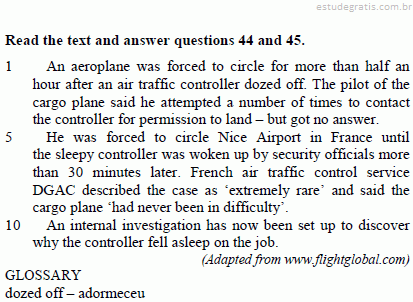 The verb “discover” (line 10), in the text, is closest in meaning to
 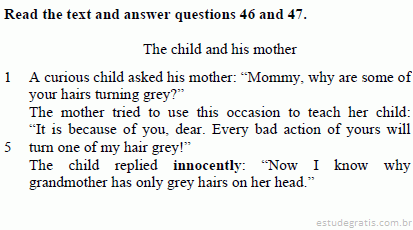 The word “innocently” (line 06), in bold type in the text, is an adverb of
 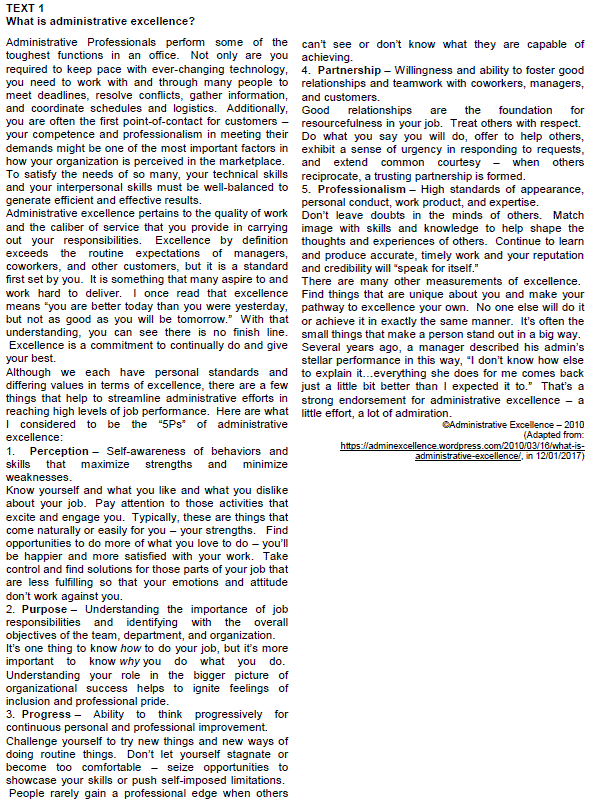 In the fragment ¨Treat others with respect. Do what you say you will do, offer to help others, exhibit a sense of urgency in responding to requests, and extend common courtesy ¨C when others reciprocate, a trusting partnership is formed¡¬, imperative forms are used for:
 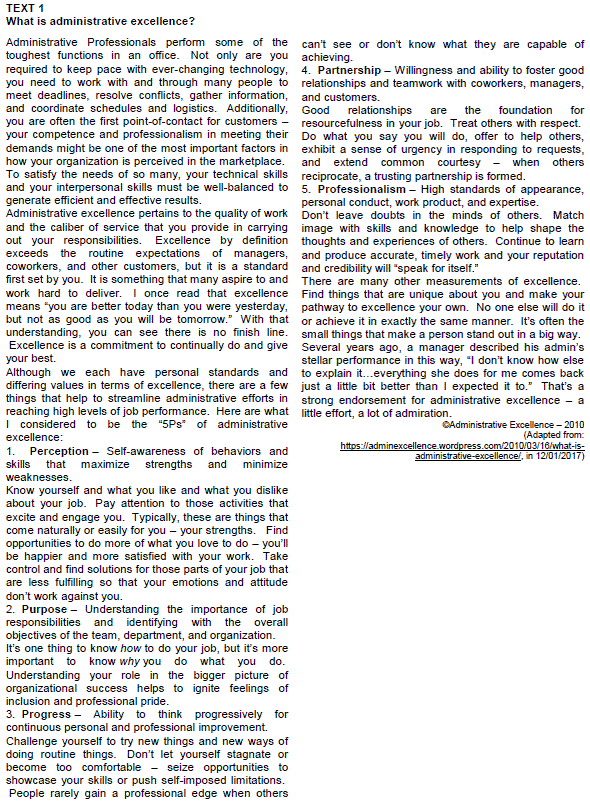 In the fragment ¨DUnderstanding your role in the bigger picture of organizational success helps to ignite feelings of inclusion and professional pride.¡¬, the underlined word can be substituted ¨C without changing the original meaning ¨C by:
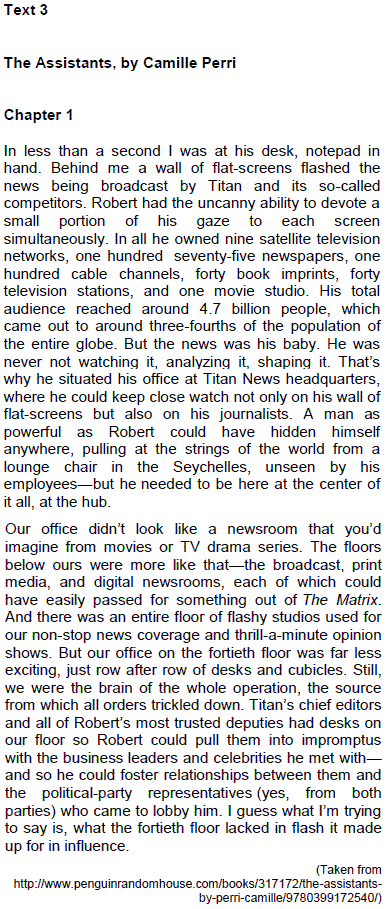
 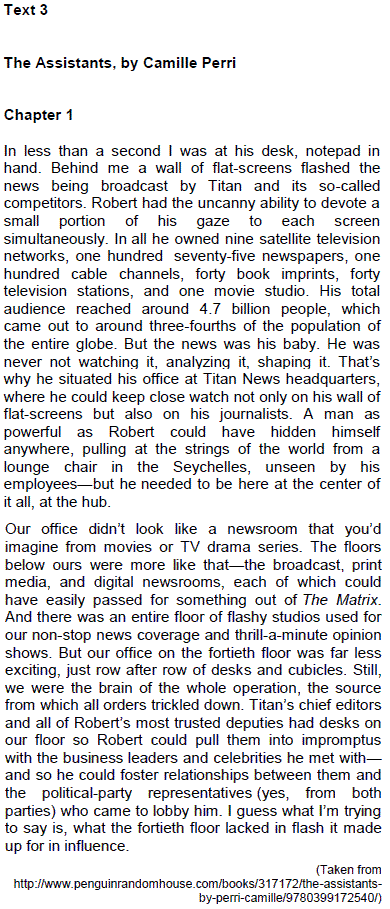 When we are writing formal e-mails, we can use the formal letter-writing phrases:
  When addressing people in formal contexts, we it is appropriate to use a title. In the alternatives below, the one which indicates the correct relationship between title and status is:
 What option best completes the following sentence
: If I had had a baby, _____________________________
Complete the sentences with the appropriate verbs:
I. Would you _____________________ a donut?
II. Who __________________ you yesterday? Chris.
III. Justin ___________________ his Chemistry exam.
Complete the sentence with the appropriate noun:
I. Last February, the bus ___________________ went up.
II. This coffee is too ________________. Please, add some sugar.
What does the following sentence mean?
Luke ran into Jon when he finished grocery shopping.
Complete the following sentences with the correct relative pronouns:
I. I told you about the book ________ helped me on that test.
II. The girl ________ is sitting on the couch is his girlfriend.
Complete the blanks of the following sentences with the adjective good or the adverb well:
I. Linda always behaves ______ in school.
II. I love perfume. They smell so _______.
III. They skate so ______.
Complete the following sentences with the appropriate adjective or adverb to make the correct comparisons or superlatives:
I. She thinks she is ______________ her teacher (intelligent).
II. This is _______________ movie I have ever seen (bad).
III. I think chocolate cake is ___________ carrot cake (delicious).
Complete the sentences with the correct form of the verbs in the passive voice:
I. The camp __________ by the rain.
II. Tea __________ at 4.
Complete the sentences with the correct interrogative pronouns:
I. _______ are these people?
II. _______ have you been? I looked for you all over!
III. ___________ cheese would you like?
Fill in the blanks with for or since:
I. I have been waiting at the airport _____ hours.
II. I haven´t seen him ______ 2015.
III. He hasn´t gone to the doctors ____ ages because he doesn´t like it.
Complete the following sentences with some or any.
I. I want to buy ________ games.
II. Have you got _________ kids?
III. Would you like _________ cake?
Put the verbs in the correct verb to suit the sentences:
I. One of the children __________ when the bell ___________.
II. The maid ____________ by the time the boss ___________.
What is the plural of the following nouns?
I. One wolf six __________.
II. One boy twelve _________.
III. One strawberry three _________.
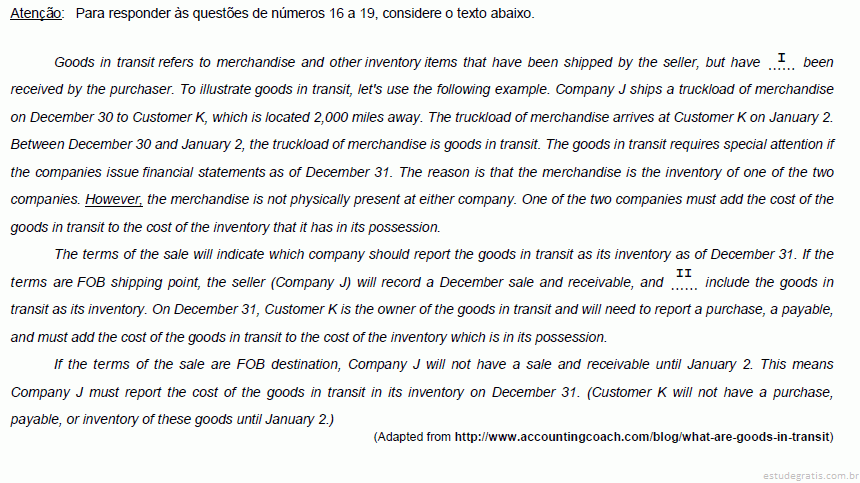 A alternativa que preenche corretamente a lacuna II é
 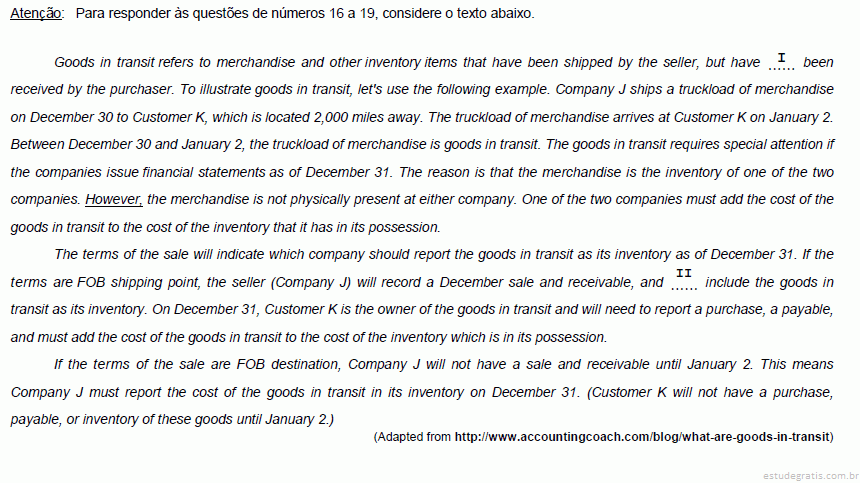 A conjunção However, no primeiro parágrafo, pode ser substituída – sem alteração de sentido – por
  A palavra que preenche corretamente a lacuna I é
  Based on the text, the only pair of opposites is in alternative
  Considering verb forms in the text, it’s correct to say: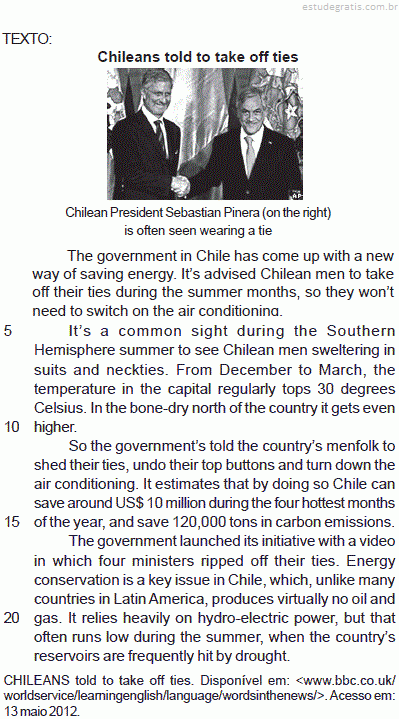
“So the government’s told the country’s menfolk to shed their ties” (l. 11-12)
The’ s in “government’s” is the
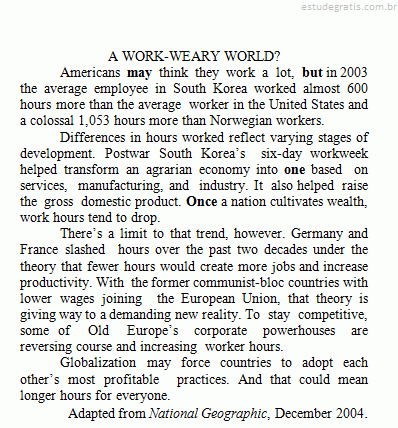
The pronoun one refers to:
Questions 42-46 refer to the text below.
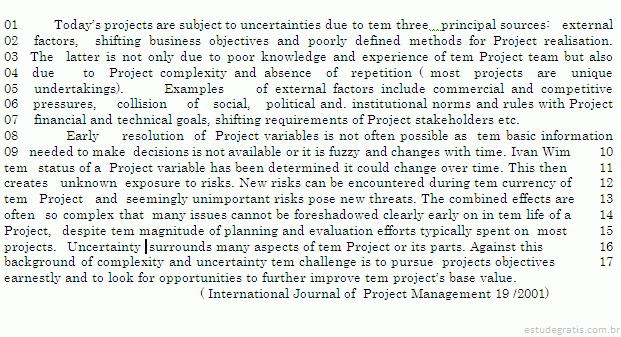
Complete the sentence:
Susan ........................... that she could not attend classes next month.
Choose the right ending for the following sentence. The committee met yesterday and .............................
Choose the right ending for the following sentence. This month will be difficult for the company because .............................
Choose the correct word: His boss should have ................... him not to use the company phone.
Choose the underlined wrong option.
Before he moved here, Jorge had been president of the company since four years.
Choose the correct option.
The bridge was built .........................
Choose the correct option.
She completed her homework early so that she could
Read the text below in order to answer questions 21 to 25:
RUSSIA'S PROMISING FUTURE
Major political developments have been taking place in Russia since the early resignation of President Boris Yeltsin.
Andrew Hunt, economist at Dresdner RCM, says the present leader Putin - a former KGB agent - is seen as someone who can get taxes collected and close the budget deficit.
"The markets are excited and believe Putin can bring about change which can make Russia's economy function properly".
The ASP General, the stock market index in Russia, grew by 350% last year.
"We will see the stabilisation of the financial situation in Russia which has had a problem with tax collection, but this will improve and...
Read the text below in order to answer questions 26 to 30.
STOCK OPTIONS
Twenty years ago, the biggest component of executive compensation was cash, in the form of salaries and bonuses. Stock options were just a footnote. Now the reverse is true. With astounding speed, stock option grants have come to dominate the pay - and often the wealth - of top executives throughout the United States. Last year, Jack Welch's unexercised GE options were valued at more than $260 million. Intel CEO Craig Barrett's were worth more than $100 million. Michael Eisner exercised 22 million options on Disney stock in 1988 alone, netting more than a half-billion dollars. In total, U.S. executives hold unexercised options worth tens of billions of dollars....
Para responder às questões de números 51 a 57, considere o texto abaixo.
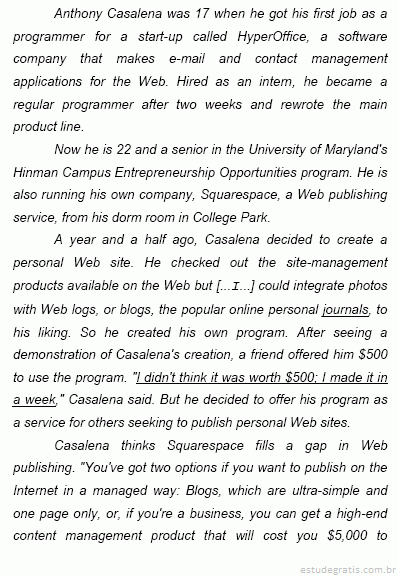
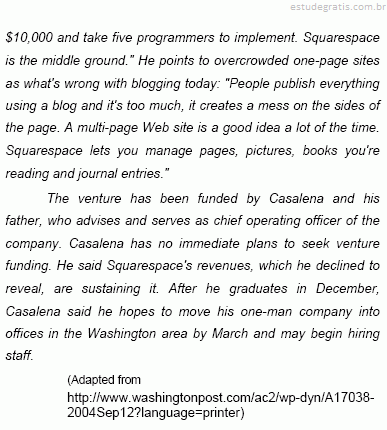
A forma correta para preencher a lacuna I é
Para responder às questões de números 51 a 57, considere o texto abaixo.
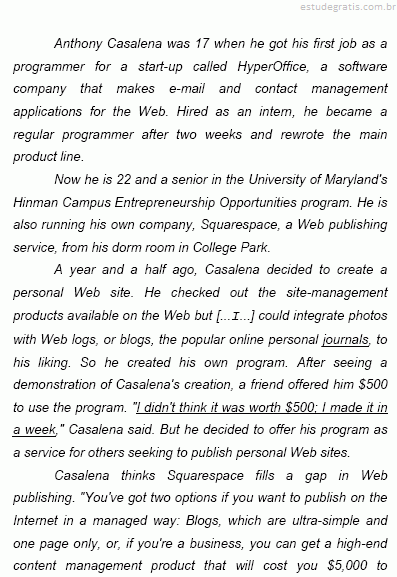
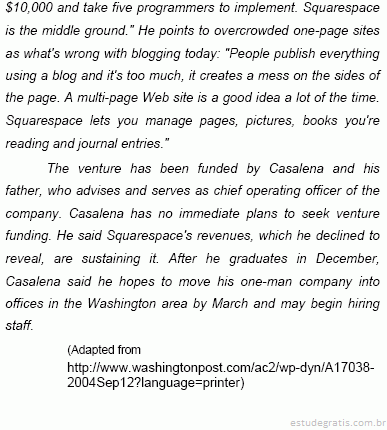
No texto, os dois períodos I didn't think it was worth $500 e I made it in a week estabelecem uma relação que poderia ser expressa por
Read the text below in order to answer questions 16 to 20:
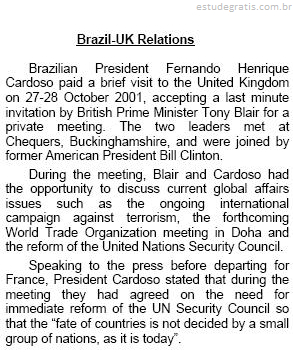
According to the Brazilian President, a small group of nations
Read the text below in order to answer questions 26 to 30
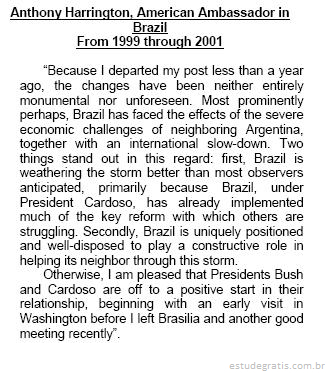
According to the text, Presidents Bush and Cardoso
TEXT I
Brazil's Northeast is attracting the most interest on part of national and international investors because it is undoubtedly one of the region's that has shown the greatest potential when it comes to development of new businesses. Over the last few years, a greater and greater number of investors have turned to the Northeast. This has been reflected in the region's growth rate. From 1990 to 1999, for example, the Northeast's gross domestic product (GDP) expanded 3.1%, compared to the national average of 2.51%. Business groups from the most diverse sectors have been quick to set up office in the region with plans for expansion.
Adapted from: http://www.brazilnow.com/arquivos/bn20/coverstory.html
...TEXT I
Brazil's Northeast is attracting the most interest on part of national and international investors because it is undoubtedly one of the region's that has shown the greatest potential when it comes to development of new businesses. Over the last few years, a greater and greater number of investors have turned to the Northeast. This has been reflected in the region's growth rate. From 1990 to 1999, for example, the Northeast's gross domestic product (GDP) expanded 3.1%, compared to the national average of 2.51%. Business groups from the most diverse sectors have been quick to set up office in the region with plans for expansion.
Adapted from: http://www.brazilnow.com/arquivos/bn20/coverstory.html
...Read the Text 2 and choose the correct alternatives from number 13 to 22.
In the sentence, "Those people who have cognitive disabilities", the pronoun in black is _________ one and it could be replaced by __________.
Read the Text 2 and choose the correct alternatives from number 13 to 22.
The word writing in the sentence "one of the most difficult skills to teach is writing", is
Read the Text 2 and choose the correct alternatives from number 13 to 22.
In the sentence ..."crossing out mistakes and writing the correct forms over them", the underlined word refers to
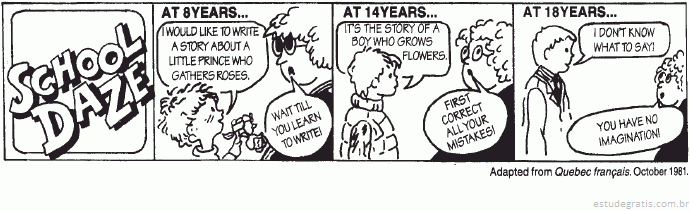
In the sentence "... a little prince who gathers roses", the main verb is a synonym of
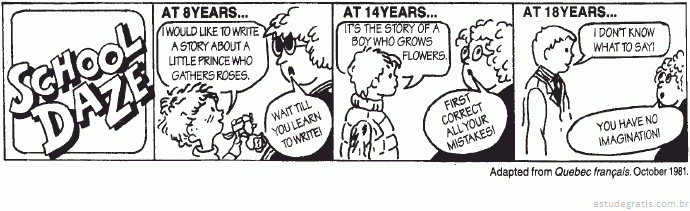
Complete the sentence that follows, correctly: The student ______ _______ years to accept that he wasn't able to write.
INGLÊS
Atenção: As questões de números 91 a 95 referem-se ao texto abaixo.
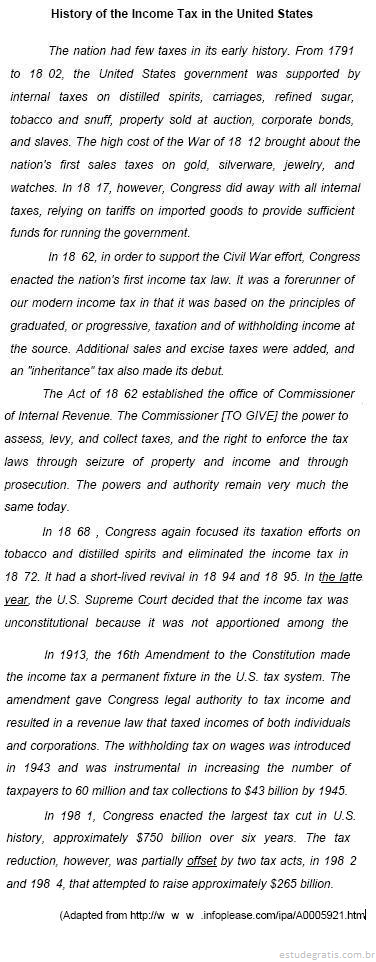
A forma correta de [TO GIVE] no texto é
INGLÊS
Atenção: As questões de números 91 a 95 referem-se ao texto abaixo.

Atenção: As questões de números 96 a 100 referem-se ao texto abaixo.
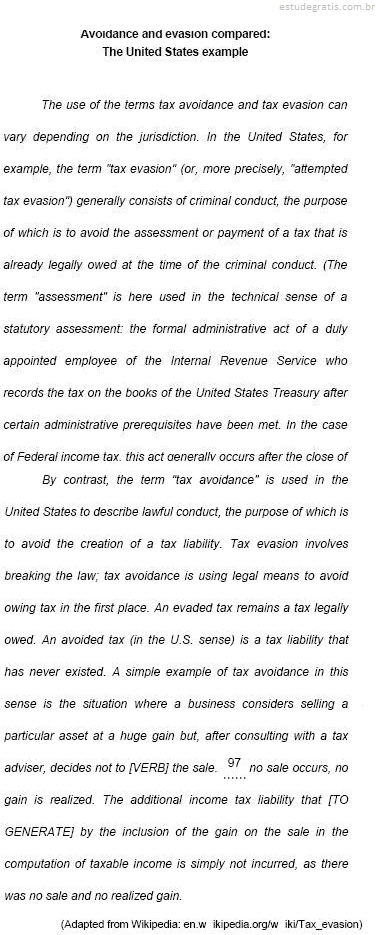
A forma verbal correta de [TO GENERATE] no texto é
Atenção: As questões de números 96 a 100 referem-se ao texto abaixo.
No texto, after a tax return has been filed pode ser traduzido como
Floating-point exponentiation under COBOL II can yield more accurate results than fixed-point exponentiation. In addition, both VS COBOL and COBOL II do computations of fixed-point data items with large exponents faster in floating-point. The floating-point computations should even be more accurate than fixed-point computations. According to the text, which is the correct answer?
Read the text below in order to answer questions 51 to 55:
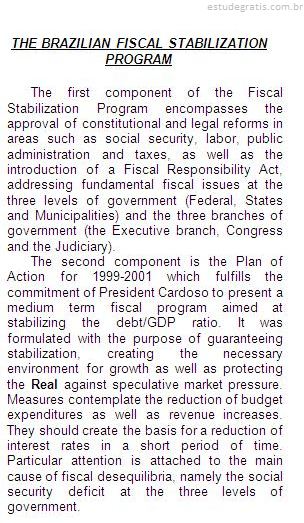
According to the text, constitutional and legal reforms