The pronoun “those” in the sentence “Our hopes are that you won’t find too many of those around here.” (lines 32-33) refers to
The modal auxiliary in boldface conveys the idea of obligation in the fragment:
Based on the meanings in the text, it is clear that
The expression in boldface introduces the idea of consequence in the fragment: 
The excerpt that includes a word (modal) in bold that conveys the meaning “of obligation” is:

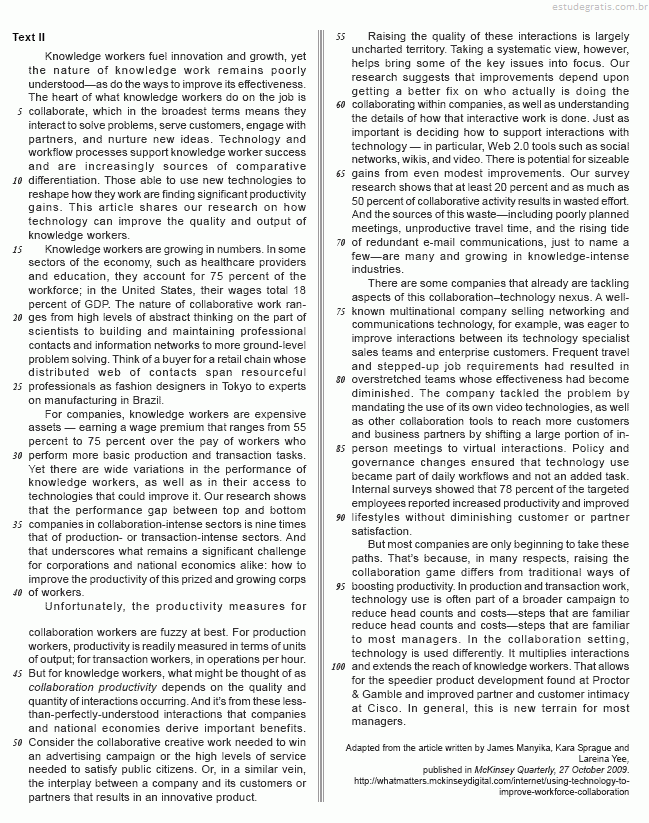
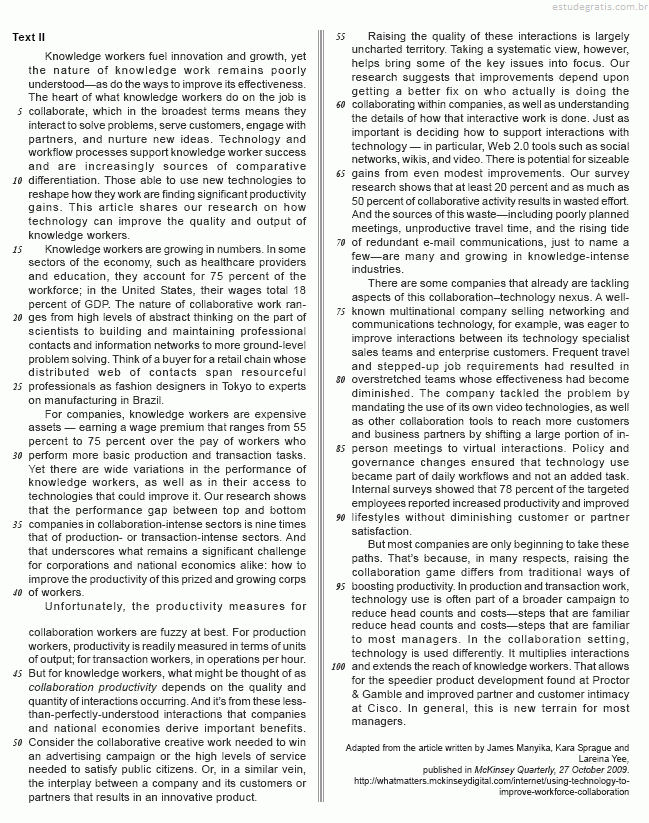
In terms of pronominal reference,

In terms of meaning, it is correct to affirm that


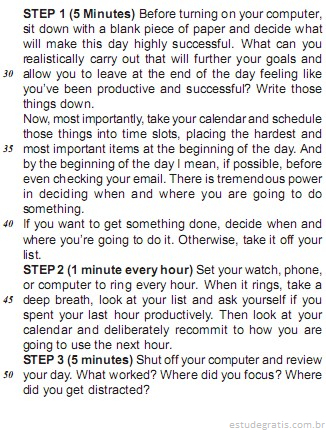
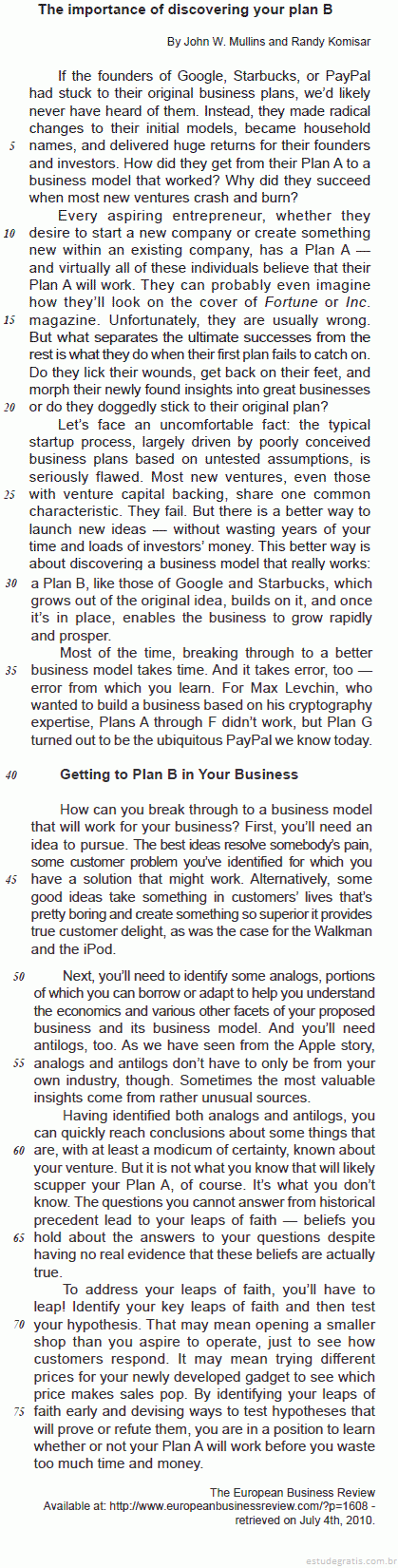
Otherwise in the sentence "Otherwise, take it off your list." (lines 41-42) can be substituted, without changing the meaning of the sentence, by


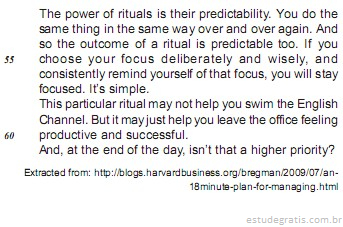
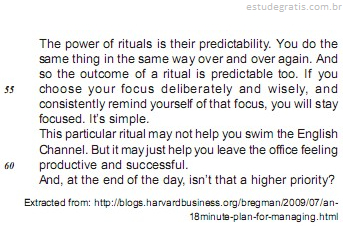
Which option correctly indicates the referent of that in "...isn't that a higher priority?" (line 61)?


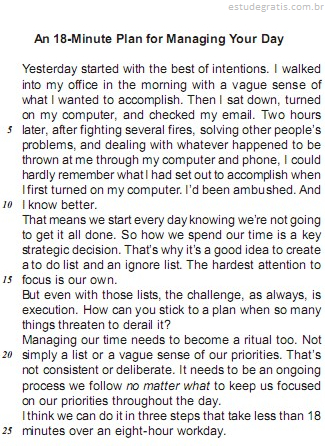
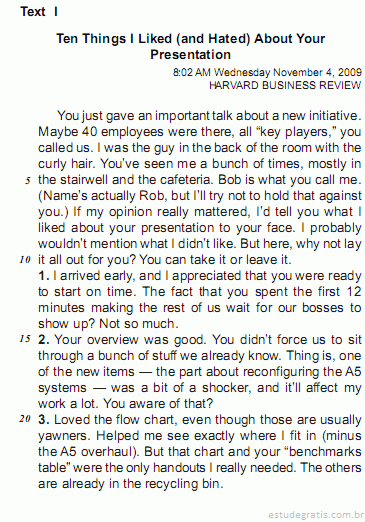
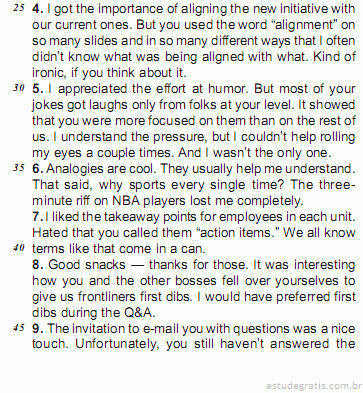
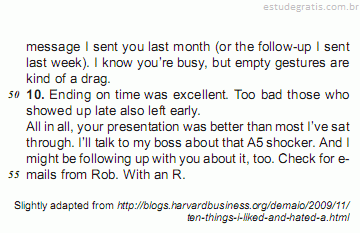
In "even though..." (line 20) and "All in all," (line 52) could be correctly replaced with
Choose the option that correctly describes the expressions both in terms of its grammatical classification and its meaning in Text II.
Mark the alternative in which %u2018that%u2019 functions as a subordinating conjunction.
The Portuguese phrase that correctly translates the verb form "will …have overtaken" in the sentence "The number of urban dwellers will for the first time have overtaken the number of rural dwellers in the world in 2008."(lines 37-39), is
"O agronegócio respondeu em 2007 por cerca de 24% da sconomia brasileira."(lines 6-7) Which of the following presents a correct semantic correspondent in standard English to the sentence above?
Which pair presents an INADEQUATE translation into English of the fragment taken from the text?
A semantic equivalent in English for the excerpt "(mais de um terço de tudo o que o Brasil exportou no ano passado)." (lines 37-38) is

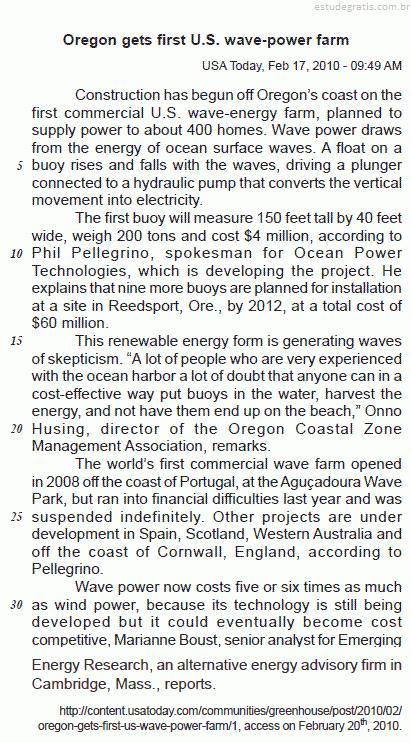
In “...and not have them end up on the beach,” (line 19), the pronoun them refers to

The term in parentheses expresses the idea introduced by the term in bold in

The word “might” in “… you have a solution that might work.” (lines 44-45) can be replaced without change in meaning by