11 Q478482
Língua Inglesa
Ano: 2014
Banca: Fundação CESGRANRIO (CESGRANRIO)
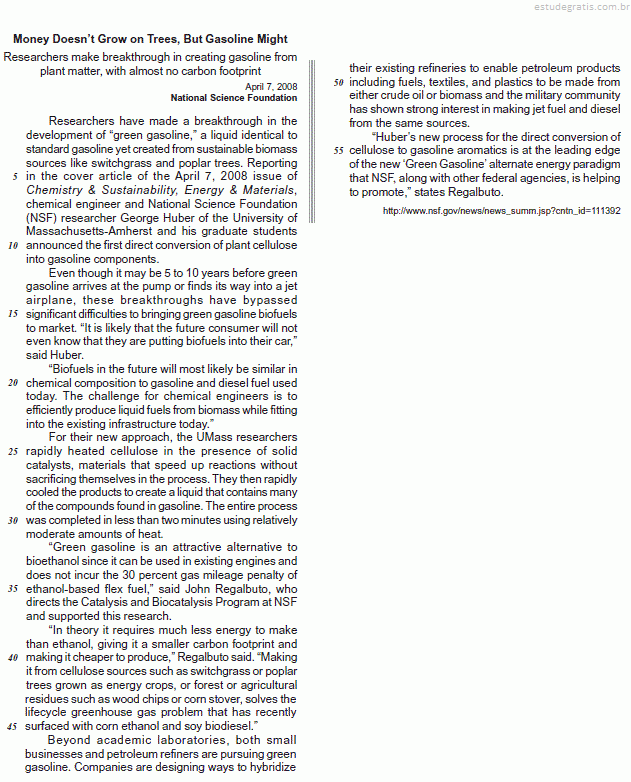
In the fragments of the text: “they may lose the desire to master whatever task you are asking them to do” (lines 12-13) and “then you have to do more than just present lessons in the app” (lines 18-19), the verb forms in bold express the ideas, respectively, of
12 Q478480
Língua Inglesa
Ano: 2014
Banca: Fundação CESGRANRIO (CESGRANRIO)
In the sentence of the text: “However, if you want people to continue using the app, and use it frequently and often, then you have to do more than just present lessons in the app” (lines 17-19), the connector However can be replaced, without any change in meaning, by
13 Q478512
Língua Inglesa
Ano: 2012
Banca: Fundação CESGRANRIO (CESGRANRIO)
Based on the meanings of the words in Text I,
14 Q478510
Língua Inglesa
Ano: 2012
Banca: Fundação CESGRANRIO (CESGRANRIO)
The sentence, in Text I, in which the boldfaced expression introduces an idea of addition is
15 Q478508
Língua Inglesa
Ano: 2012
Banca: Fundação CESGRANRIO (CESGRANRIO)
In Text I, the expression “turn down” in “I couldn’t turn down the great starting salary and a chance to live in New Orleans” (lines 12-14) could be replaced, without change in meaning, by
16 Q478798
Língua Inglesa
Ano: 2009
Banca: Fundação CESGRANRIO (CESGRANRIO)

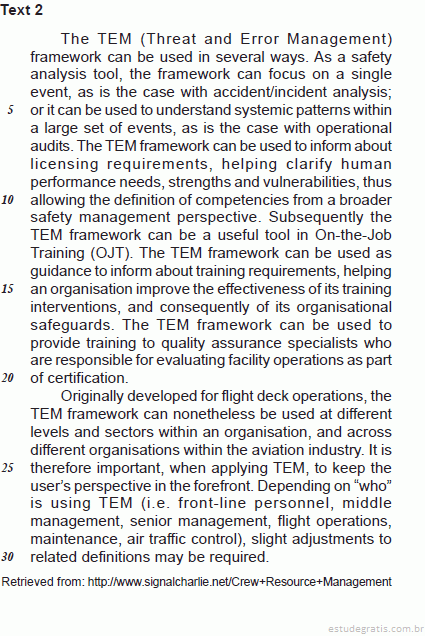
In "slight adjustments to related definitions may be required."(lines 29-30), the fragment “may be required” can be substituted by
17 Q478796
Língua Inglesa
Ano: 2009
Banca: Fundação CESGRANRIO (CESGRANRIO)

Check the only item in which the boldfaced item introduces a contrast.

18 Q478794
Língua Inglesa
Ano: 2009
Banca: Fundação CESGRANRIO (CESGRANRIO)

Mark the only option in which the two words ARE NOT synonymous.

19 Q478792
Língua Inglesa
Ano: 2009
Banca: Fundação CESGRANRIO (CESGRANRIO)

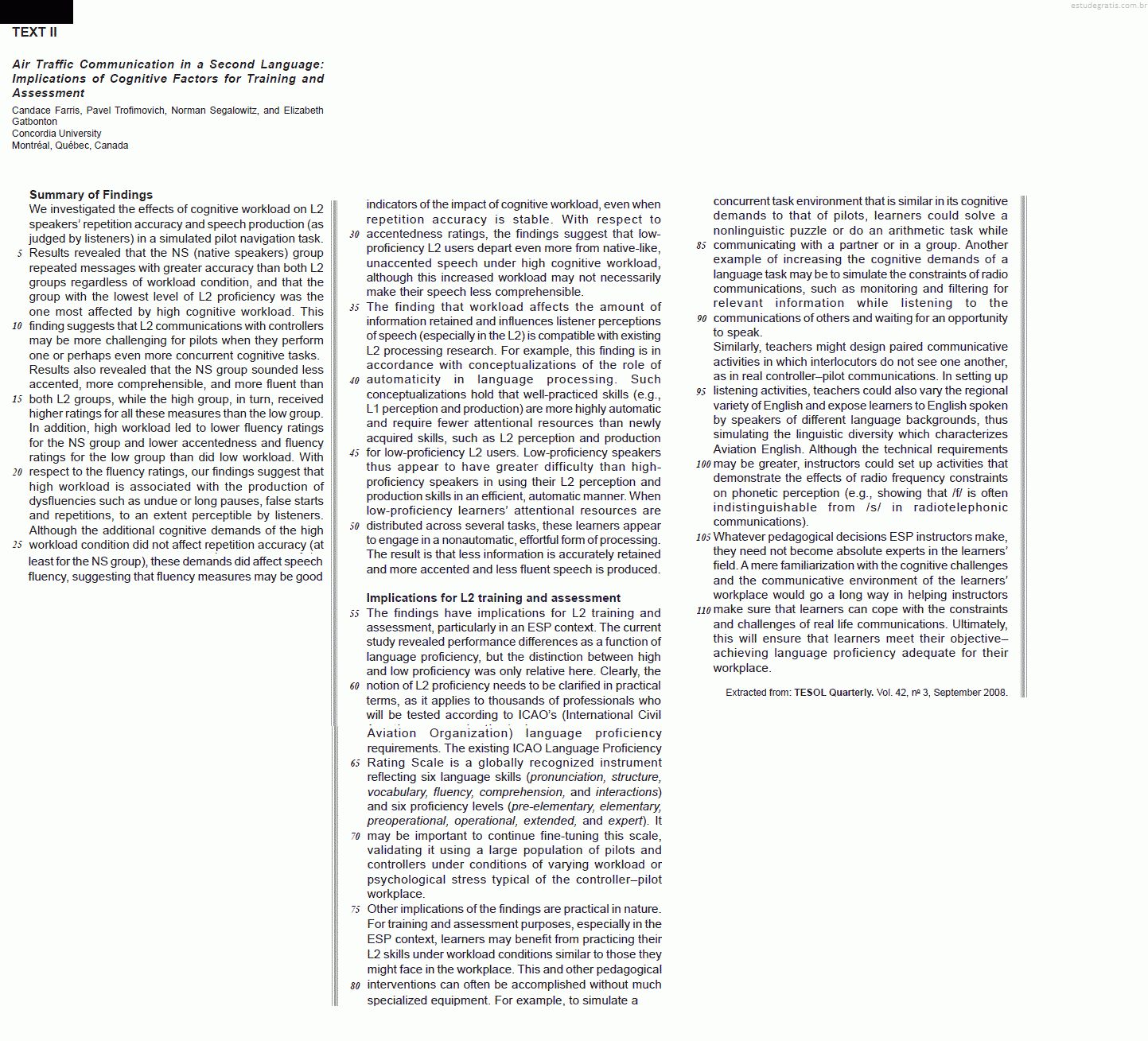
In line 72, the author juxtaposes the words “Dubbing (drubbing?)”. This play on words corresponds to the meanings in

20 Q478790
Língua Inglesa
Ano: 2009
Banca: Fundação CESGRANRIO (CESGRANRIO)

The connectors “Likewise” (line 44) and “unlike” (line 83) express ideas that are similar to those denoted by