
261
Q488592
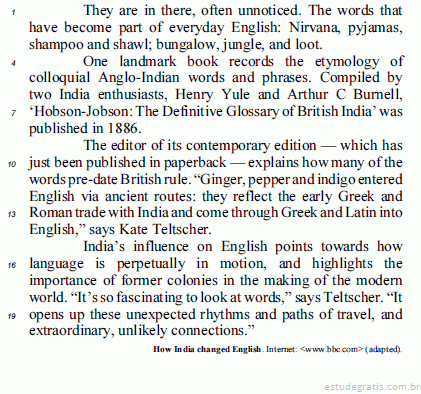
Based on the text How India changed English, judge the following items.
The words “highlights” (l.16), and “unlikely” (l.20) can be correctly and respectively replaced by draws attention to and improbable.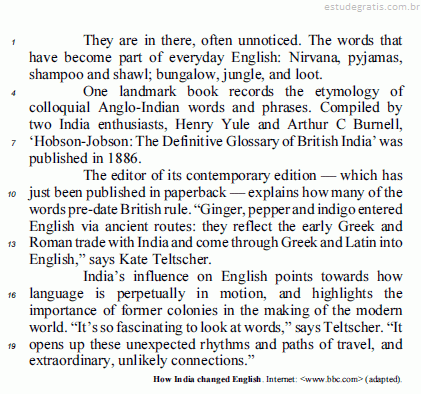
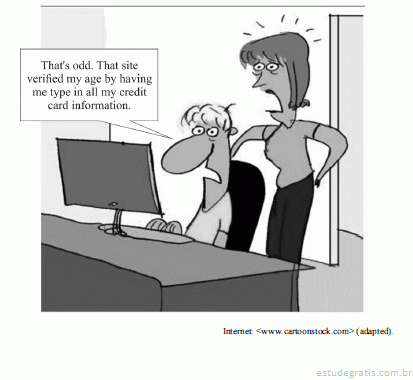
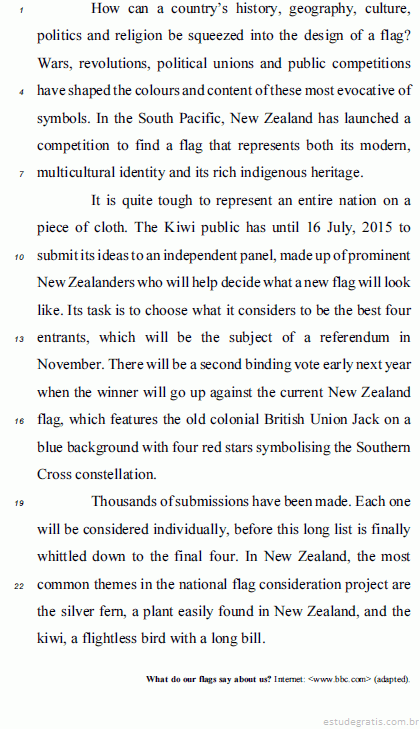
 The opposite of “faster” in “would be faster” (l. )is:
 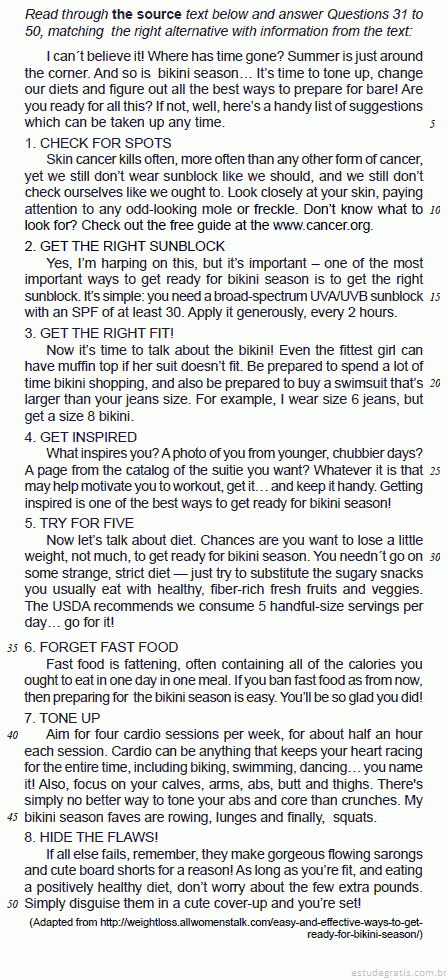 The English verb phrase can be marked for tense and aspect. The use of the perfect tense in “Where has time gone?” (line 1), establishes the following:
 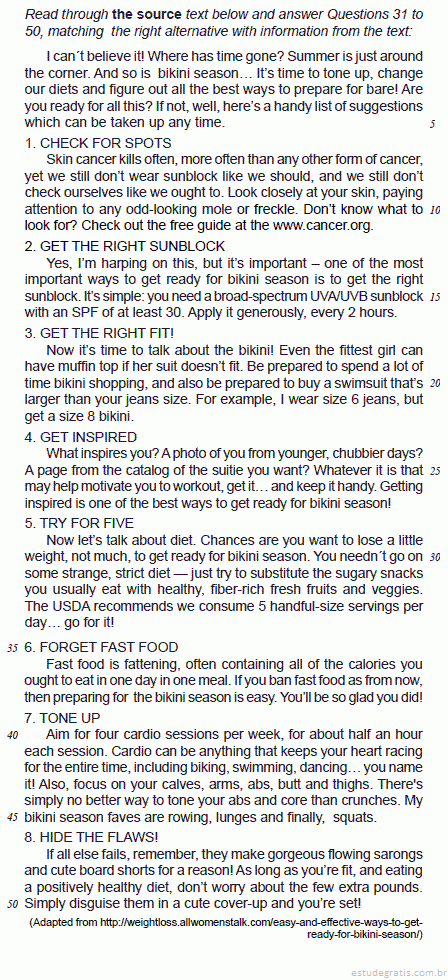 A text is cohesive if, as a whole, its sentences are linked and make sense. An example of cohesion in the source text is “ If not” (line 4), which is characterized by: