341
Q488046
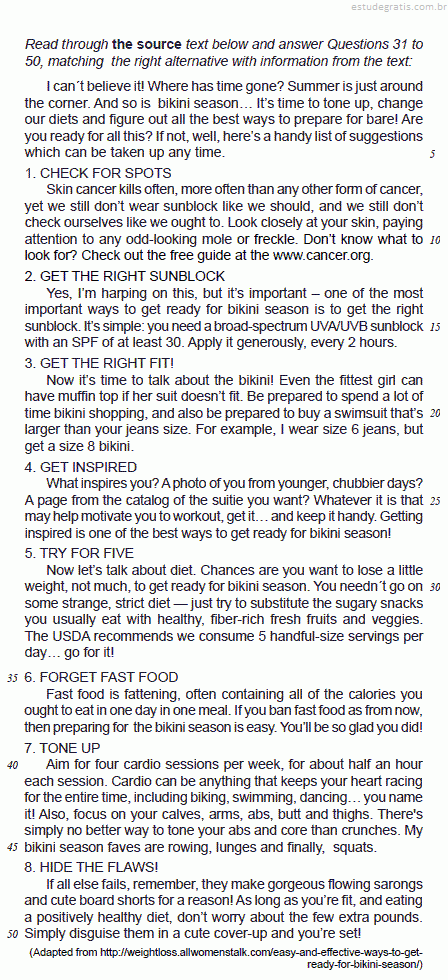 A semi-modal verb in English is a special, non-typical type of verb which behaves like a lexical verb but also expresses modality (Carter and McCarthy, 2006: 395) The modal meaning expressed by the semi-modal in the clause “You needn´t go on some strange, strict diet…” is one of lack of:
 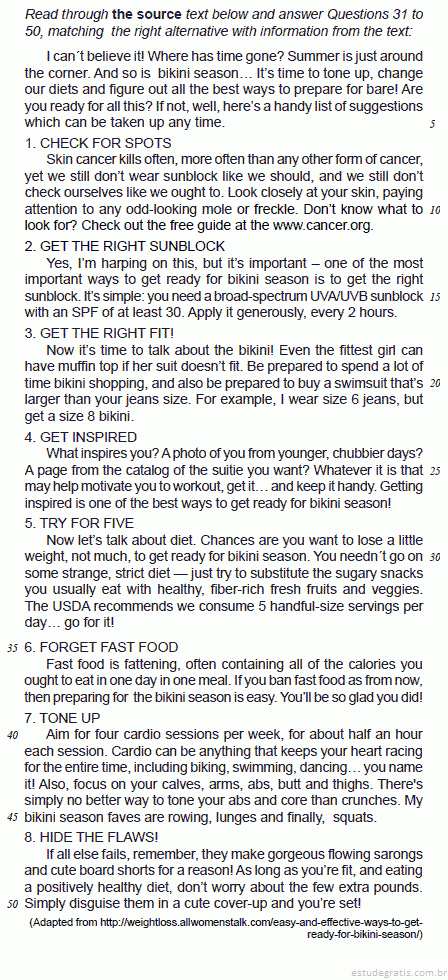 Adjectives describe the features of people and things denoted by nouns or pronouns. On the whole, they cannot be identifi ed by their form, but most typically by their functions in a sentence (Carter and McCarthy, 2006: 236). According to the text, the only sequence that contains words which function as adjectives is :
 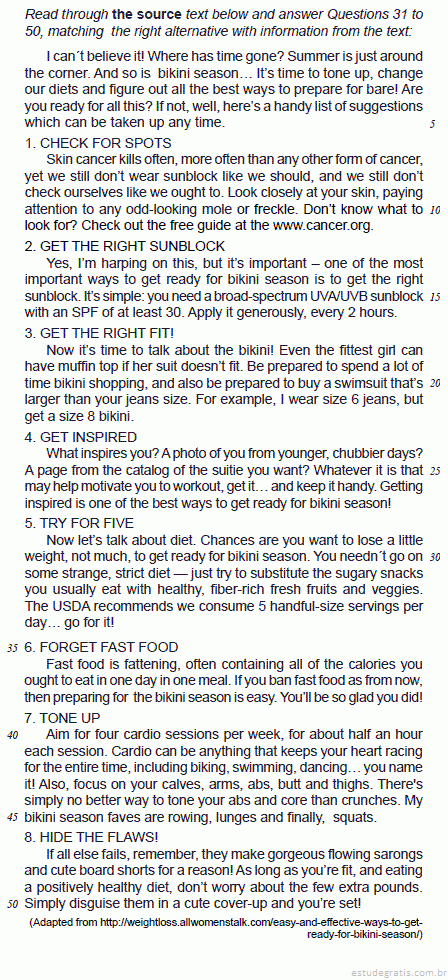 The connection established between the two clauses in the excerpt “As long as you’re fit, …., don’t worry about the few extra pounds”, (line 48-49) may be described as one of: