
Língua Inglesa
Ano: 2004
Banca: Centro de Seleção e de Promoção de Eventos UnB (CESPE)

Based on the text above, judge the following items.

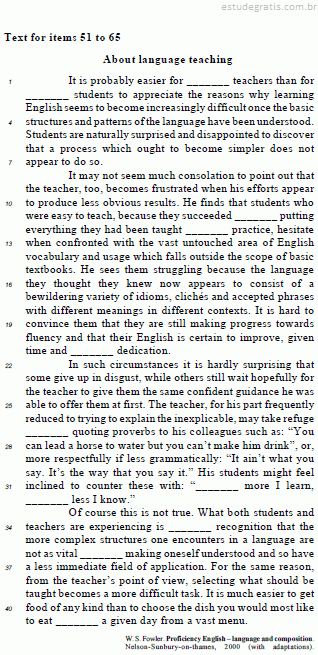
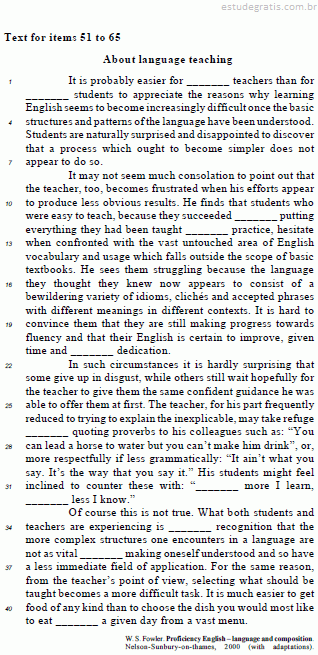
“however” (l.4) is synonymous with whenever.

Língua Inglesa
Ano: 2004
Banca: Centro de Seleção e de Promoção de Eventos UnB (CESPE)

Based on the text above, judge the following items.

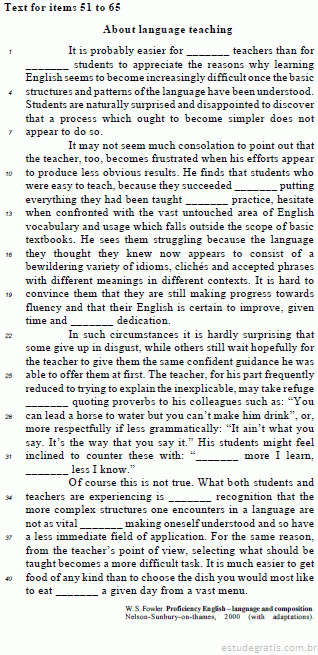
“hasty” (l.21) means done in a hurry.

Língua Inglesa
Ano: 2004
Banca: Centro de Seleção e de Promoção de Eventos UnB (CESPE)

In the previous text,

the expression “point out” (l.8) is synonymous with draw attention to, indicate.

Língua Inglesa
Ano: 2004
Banca: Centro de Seleção e de Promoção de Eventos UnB (CESPE)

In the previous text,

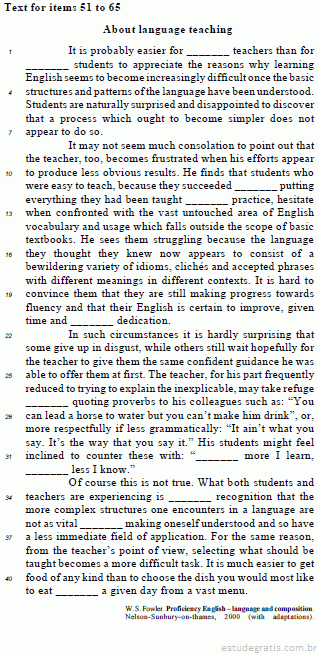
“struggling” (l.15) means challenging, attacking.

Língua Inglesa
Ano: 2004
Banca: Centro de Seleção e de Promoção de Eventos UnB (CESPE)

In the previous text,

the word “bewildering” (l.17) can be replaced by profusion or abundance with no change in meaning.

Língua Inglesa
Ano: 2004
Banca: Centro de Seleção e de Promoção de Eventos UnB (CESPE)

In the previous text,

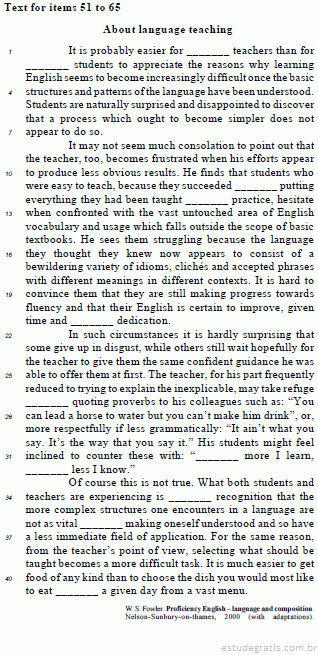
“counter” (l.31) means argue against, respond to.

Língua Inglesa
Ano: 2004
Banca: Centro de Seleção e de Promoção de Eventos UnB (CESPE)

In the previous text,

“selecting” (l.38) is synonymous with picking out.

Língua Inglesa
Ano: 2004
Banca: Centro de Seleção e de Promoção de Eventos UnB (CESPE)

According to the established rules of phonetics and phonology of the English language, judge the items below.

In the pronunciation of the following words subtle, lamb, climb and thumb, the b is always silent.

Língua Inglesa
Ano: 2004
Banca: Centro de Seleção e de Promoção de Eventos UnB (CESPE)

According to the established rules of phonetics and phonology of the English language, judge the items below.

In the following words, the initial h is never silent: hate, hello, honest, history.

10 Q478595
Língua Inglesa
Ano: 2004
Banca: Centro de Seleção e de Promoção de Eventos UnB (CESPE)

According to the established rules of phonetics and phonology of the English language, judge the items below.

The pronunciation of the verbal forms attached, disposed, needed, advanced, disturbed, and noted leads to the conclusion that there are only three possibilities for the edending pronunciation.